
 English (United Kingdom)
  Italiano (Italia)
Indice
Looking for a fun and creative DIY project to do with your kids? In this tutorial, we’ll show you how to make cute Bee-Themed Placeholders using simple bottle caps! It’s an easy, colorful craft made with recycled materials—perfect for adding a personal and playful touch to your table setup. Each little bee can carry a name tag for your guests, making everyone smile as they find their spot!
Chiara's Little Bees
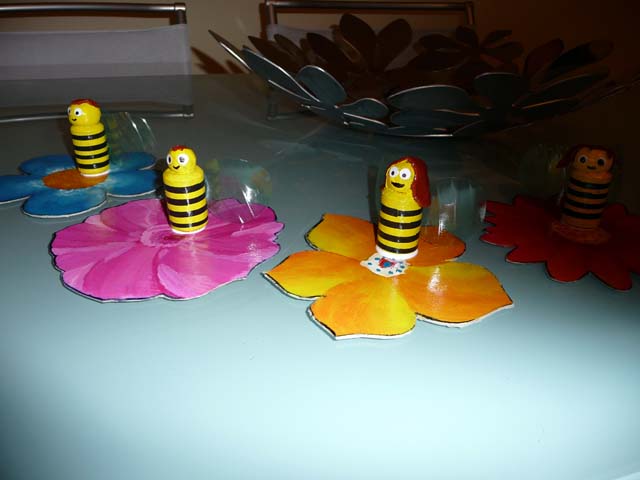
Here's a delightful creation by Chiara, a budding artist of just five years old, and her dad Massimo (MaxLaiena), who lovingly crafted these adorable "bees" and kindly shared the photos and instructions with us so we can make them together with our little "artists in the making".
Of course, using these bees as placeholders at the table during a family lunch or dinner is just one of the many possibilities for these creations. Not only will they entertain the kids, but they'll also amaze grandparents and relatives who get to admire them.
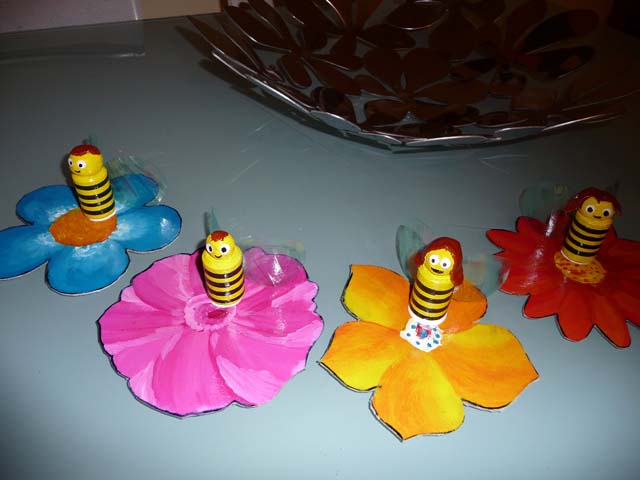
What You'll Need
Here’s what you’ll need to make these adorable little bees:
- Some Corks
- Modelling Clay (like DAS)
- Tempera or Acrylic Paints
- Some Sturdy Cardstock
- PVA Glue
- Black Electrical Tape
- A Plastic Bottle (like from mineral water)
How to Make Them
To start, you'll need to shape some balls using modelling clay—the kind that hardens, like clay or DAS.
Once you've created the balls, add "hair" with different styles and shapes, and then leave them to dry.
Once they're completely dry, use PVA glue to attach the heads (the balls you've just made) to the bodies (the corks). Then, using a brush, apply diluted PVA glue (mixed with water) over both the corks and the freshly attached heads.
.

Cutting the Wings
Next, while waiting for the PVA glue to dry, take a plastic bottle—like one used for mineral water or milk—and clean it thoroughly. Then, cut out wing shapes for your bees from the bottle.
If you'd like your children to join in on this part, make sure they only use rounded-tip scissors designed for kids, and assist them with this step, as it's the most "delicate" part of the process.
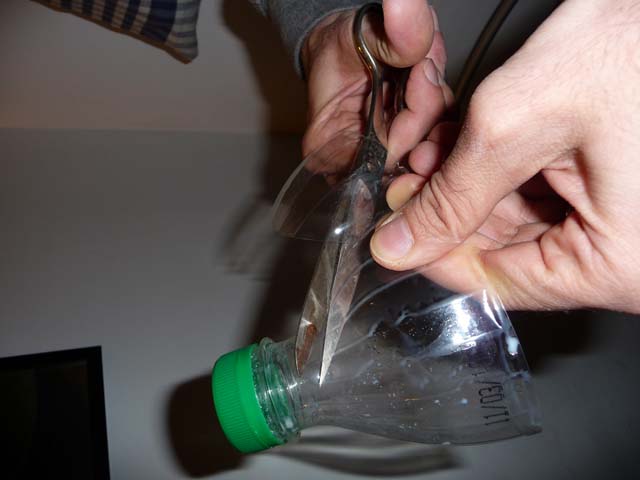
Painting Our Placeholders
At this stage, use acrylic paints to colour the bees' heads and bodies in yellow, while the hair can be painted black or brown. Cut the black adhesive tape into thin strips to create the bees’ black stripes on their bodies.
Then, if you have one of those hole punch machines for paper binders, gather a few small paper discs from its reservoir. Otherwise, you can cut them out manually and stick them onto the bees' heads with PVA glue. Finally, use a marker to draw pupils in the centre of the paper discs and add a mouth just below.
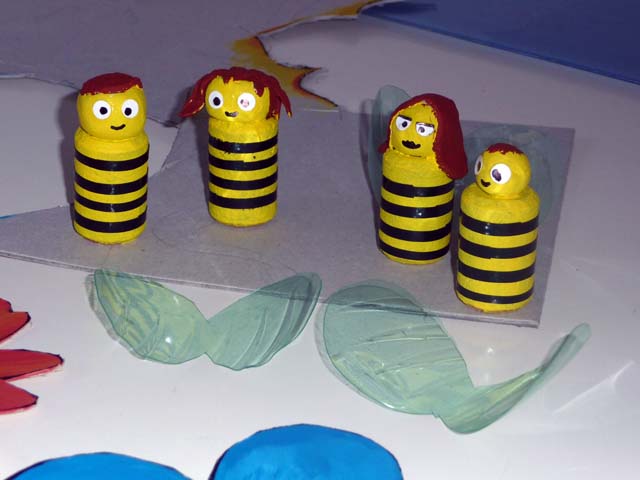
Making the Base Supports
Now, draw some flowers on the cardboard and paint them using acrylic colours. The flowers can be of various shapes and colours, giving children the freedom to let their creativity run wild. Let them choose the colours and techniques they prefer—you’ll be amazed at what they can come up with.
Once the flowers are beautifully drawn, carefully cut them out along the edges with scissors (always rounded-tip ones for safety). This step requires a bit of patience and care.
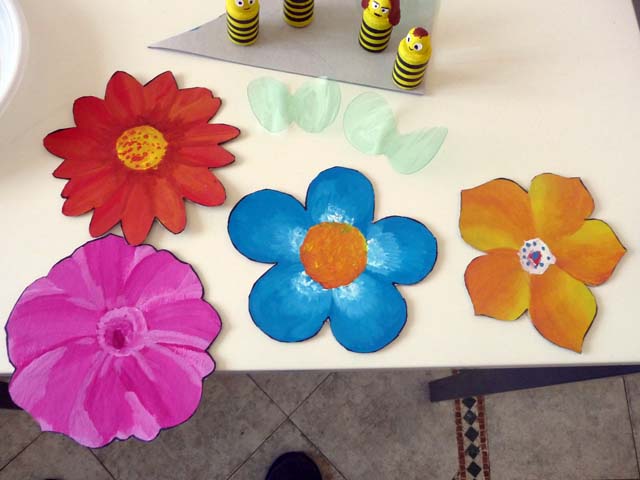
Final Touches
Apply a drop of adhesive to stick the bees onto the flowers and also to attach the wings to their bodies. Adhesives can be hazardous, especially if they come into contact with the skin or eyes, so make sure to read the instructions carefully before using them. Always work safely and keep children at a distance during this step.
Once everything is assembled, spray a layer of clear protective varnish to make the bees shine and prevent the paint from fading or smudging. (Again, keep children at a safe distance while applying the varnish.) Finally, use a marker to write names on the flowers and turn these bees into unique placeholders for your table settings.
Thank you all
MaxLaiena