
 English (United Kingdom)
  Italiano (Italia)
Indice
Yes, you read that right! In this tutorial, we’ll show you how to make a small cardboard boomerang that actually works. It’s a fun and safe DIY project, great for kids. With just a piece of cardboard, some scissors, and a bit of time, you can create a toy that really comes back when thrown correctly. Cheap, creative, and fun—perfect for curious little hands!
Introduction
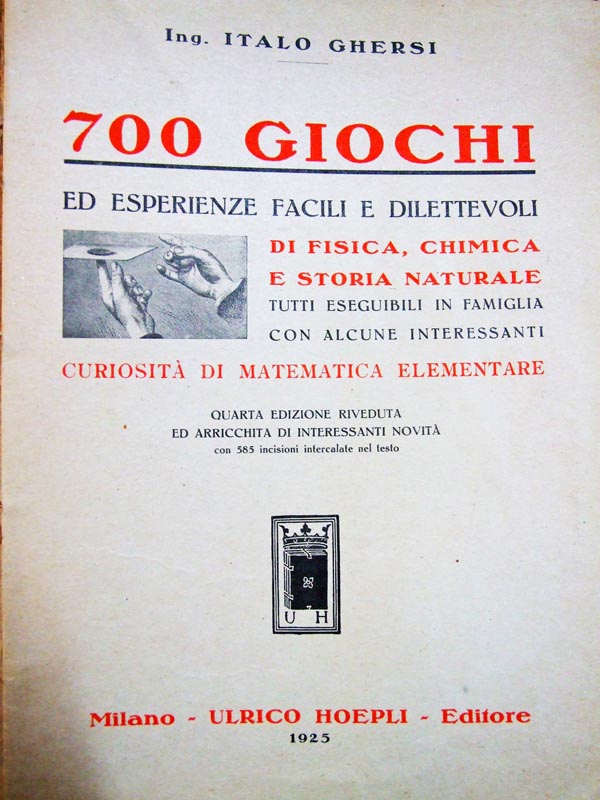
I have to admit, today’s idea isn’t mine—it comes from a book my father bought for my brother and me when we were kids at "Porta Portese", the famous flea market in Rome.
The book was, of course, second-hand and already old when it was purchased (it was printed in 1925), but it turned out to be one of the most wonderful gifts we could have received. Its full title is "700 Easy and Delightful Games and Experiments in Physics, Chemistry, and Natural History" by Italo Ghersi.
I’ve read and reread it so many times that now it’s in rather poor condition, but it still has a place on my bookshelf as a fond reminder of the times we spent together.
What is a Boomerang?
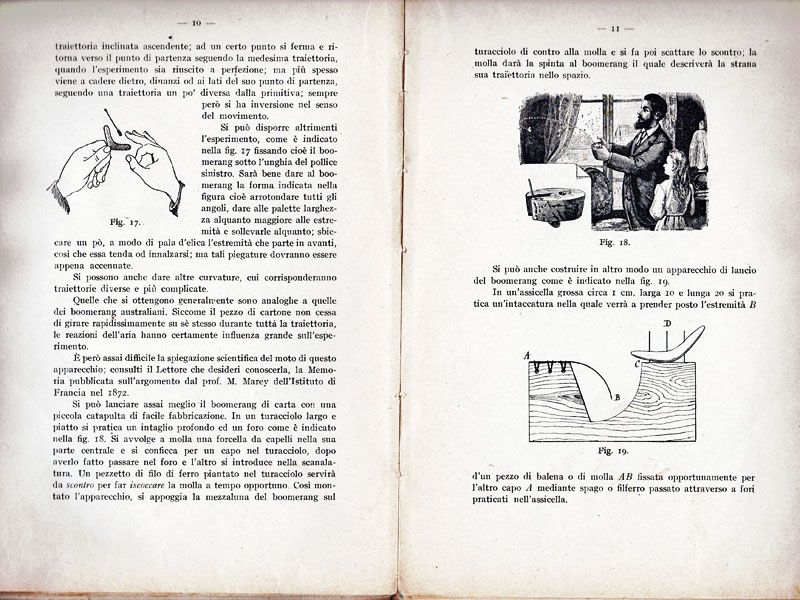
Let’s dive into the pages that talk about the boomerang, an ancient weapon primarily used by Australian Aboriginal people. As is the style of the book, it not only explains how it works but also encourages readers to "try it out for themselves" by explaining how to make one.
Of course, a real boomerang, originally designed as a weapon, is a sturdy and heavy object. It should only be thrown in open areas, far from people and animals, while also being mindful of potential hazards like windows or cars that could be damaged.
The book, however, provides instructions to build a miniature version that works perfectly and can be safely thrown indoors, like in your living room. It’s a great way to show kids (and even grown-ups) how a properly thrown boomerang always comes back.
Don’t believe it? Keep reading the article and give it a try—I promise it works.
What Shape Should a Boomerang Have?
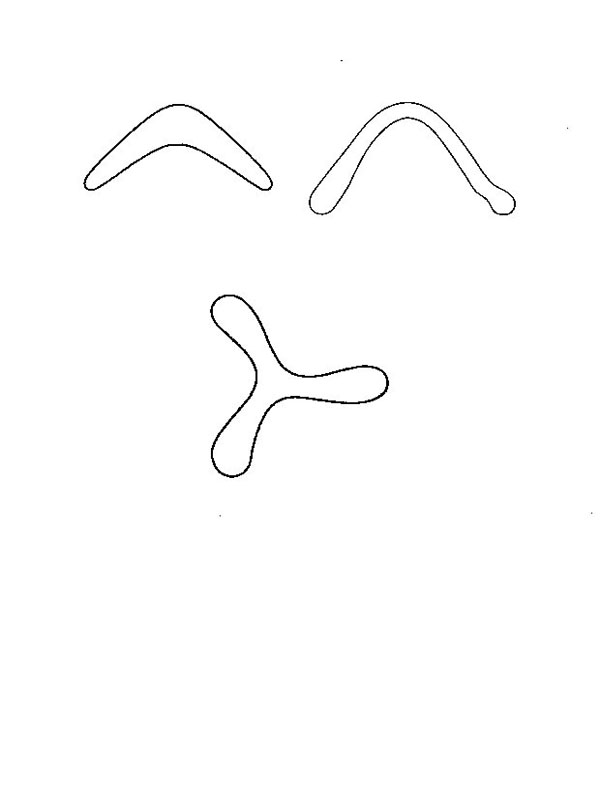
The first challenge to tackle is the shape. We're all familiar with the classic design featuring an angle slightly greater than a right angle, with a wider vertex that tapers towards the ends. However, a quick search online reveals many different shapes for boomerangs.
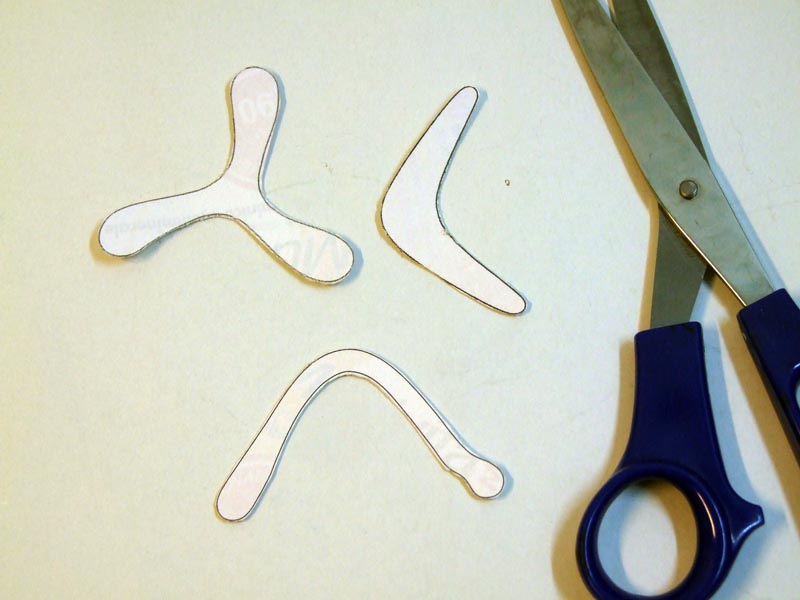
To simplify the process, I’ve chosen three specific designs and included their outlines in a PDF file that can be downloaded and printed.
What You'll Need
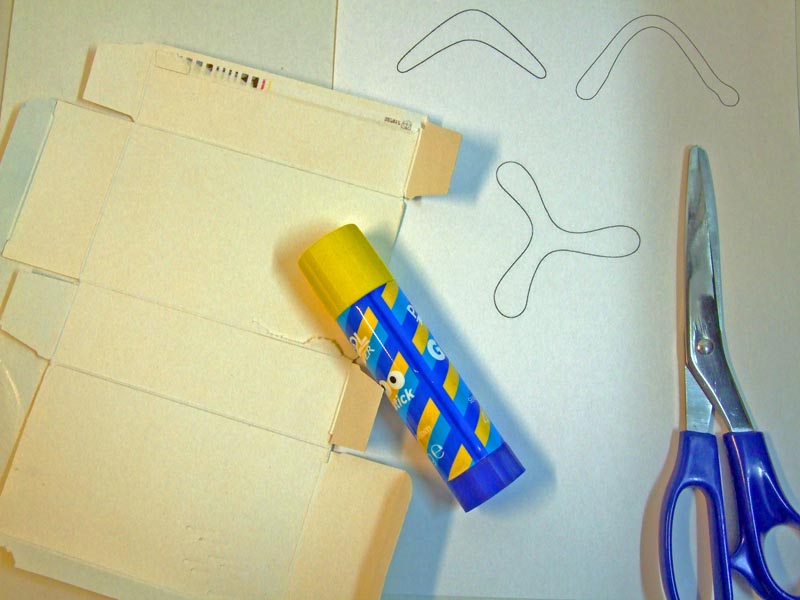
Once you've printed the PDF with the boomerang templates, you'll only need a few other items:
- A piece of cardboard (I used a box that was about to be recycled).
- Paper glue (personally, I prefer glue sticks, but any type will do).
- A pair of scissors (since children may be nearby, rounded-tip scissors are strongly recommended).
Let's Get Started
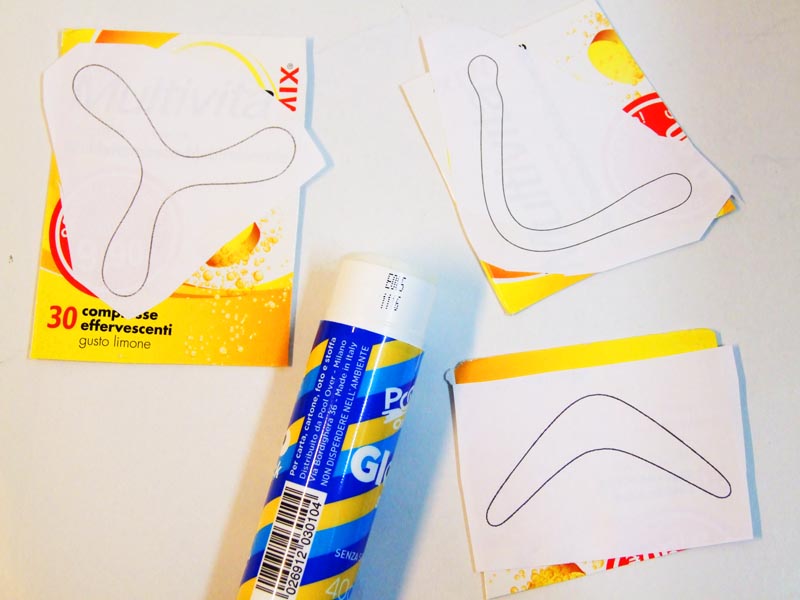
Once you've printed the PDF, cut out the boomerang templates and stick them onto pieces of smooth, uncreased cardboard.
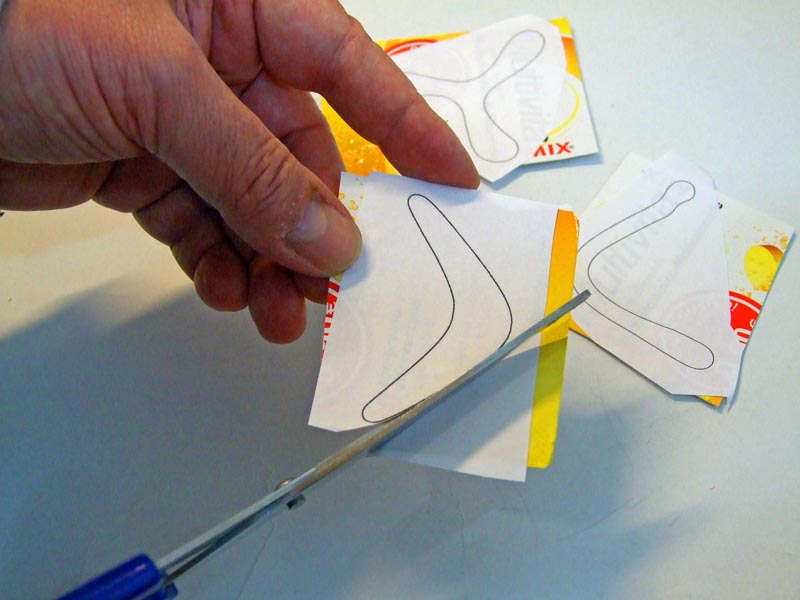
Once the glue has dried, carefully cut along the edges of the boomerang templates using scissors.
In the end, we should have some small cardboard boomerangs like these.
Let's Add Some Colour to Our Creation
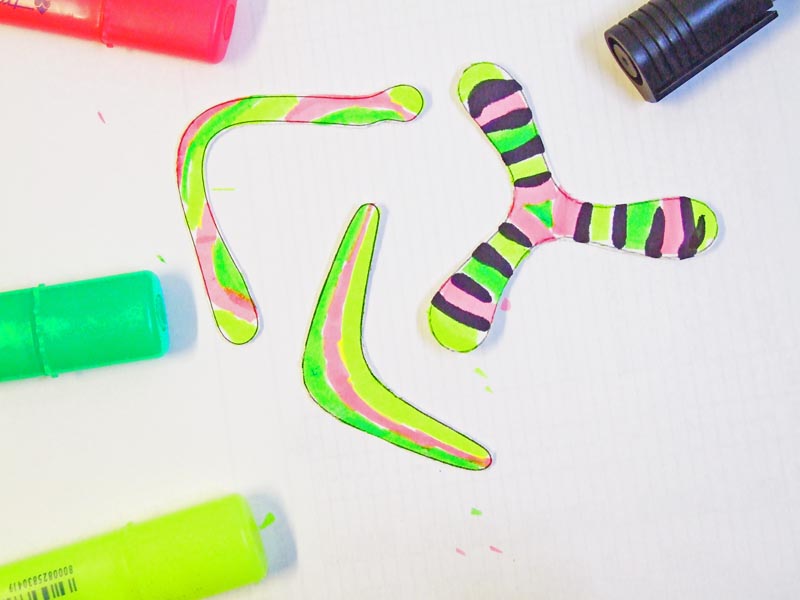
Now, it's time to grab some paints, markers, highlighters, or any kind of colouring supplies you have at home and let your creativity flow. Make your miniature boomerangs vibrant and eye-catching!
How to Throw Your Toy Boomerang
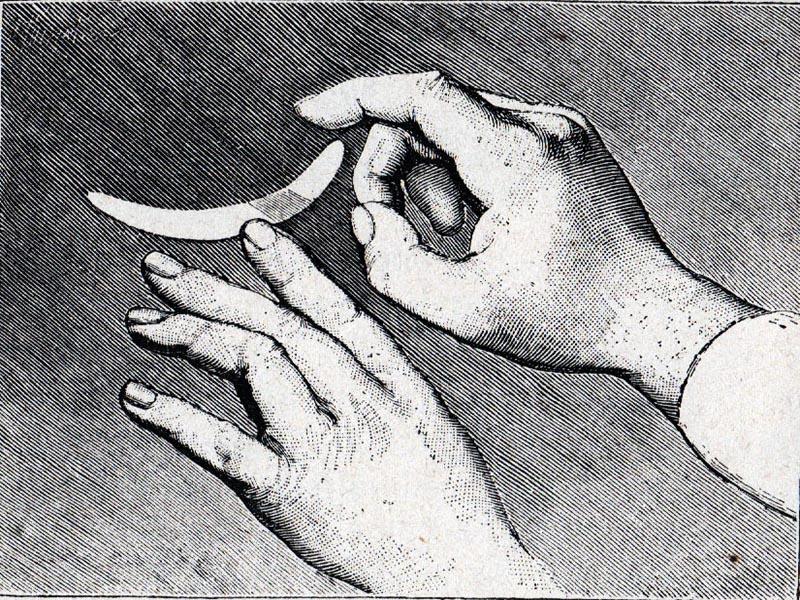
Now it's time to throw your boomerang. Naturally, you won't hold it like a real boomerang, as you won't be able to apply the same amount of force.
Here’s the detailed description from the book:
“Hold the cardboard in the manner shown in the illustration, placing it between the fingertip and nail, so that its plane is tilted 45° to the horizon. Then give a sharp flick to one of the ends. The cardboard will spin on its axis, following an upward-slanted trajectory. At a certain point, it stops and returns to the starting point along the same path.”
An Alternative Way to Throw Your Toy Boomerang
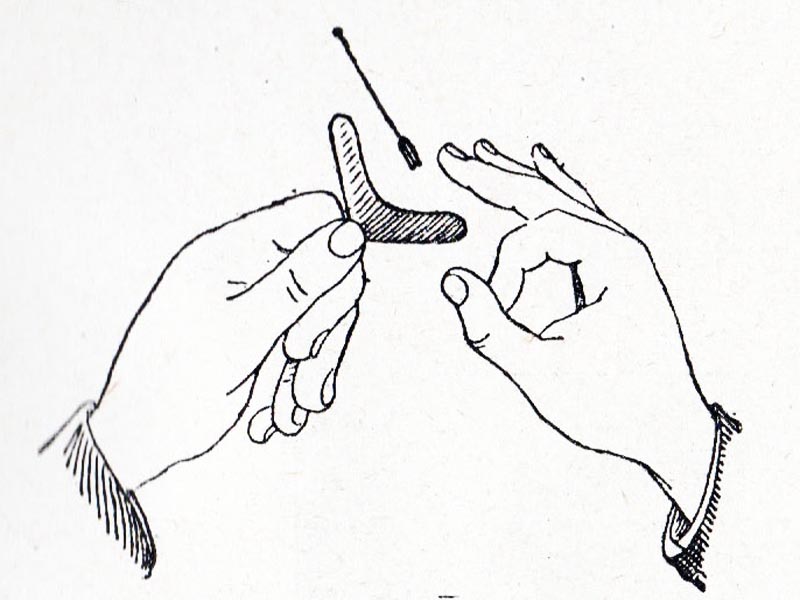
"The experiment can also be set up differently, as shown in the following figure, by placing the boomerang under the thumbnail of the left hand. It’s a good idea to shape the boomerang as indicated in the figure: rounding off all the corners, giving the blades slightly more width at the ends, and raising them slightly. One end, like a propeller blade, can be angled slightly forward to encourage it to lift, but these bends should be very subtle.
You can also try other curves, which will result in different and more complex trajectories.".
Well, after these final tips, all that's left is for me to wish you good luck and, most importantly, lots of fun for you and your kids. I hope you enjoyed this article and that creating this simple toy manages to bring the same enthusiasm to your little spectators that it brought to me some time ago (let's not define how long ago, please!), and then to my own children.
Thank you all.
Luciano (Capitan Farloc)