
 English (United Kingdom)
  Italiano (Italia)
Indice
It’s quite common — especially with chipboard furniture — for threaded inserts to become loose or even pull out completely over time, because the wood around them has worn out. In this guide, we’ll see how to repair a damaged insert hole quickly and effectively using easy-to-find materials and simple techniques. A practical fix to save your shelf, kitchen cabinet, or desk without replacing the entire piece!
Introduction
Threaded inserts (also known as wood or chipboard inserts) are a widely used fastening method in furniture, especially in budget-friendly models, thanks to their practicality and quick assembly process. However, it's not uncommon for these inserts to loosen or give way over time, leading to instability and movement between the assembled parts.
In this article, we'll explore how to tackle this issue, offering a step-by-step guide to repairing threaded insert holes in chipboard, composite wood, or OSB panels, so you can extend the life of your furniture without having to replace the entire piece.
Specifically, we'll focus on fixing a pull-out desk shelf from a bridge wardrobe. The stop system (designed to prevent the shelf from being completely pulled out) consists of pins screwed into threaded inserts, which are in turn screwed into the holes in the chipboard shelf.
The Issue
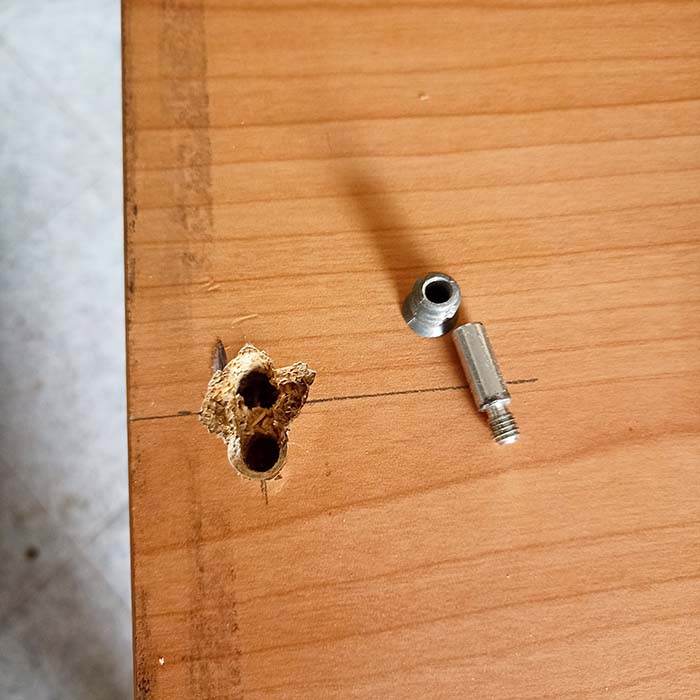
As you can see in the photo, the threaded insert has pulled out, damaging its hole beyond repair. This happened partly because, well, chipboard is what it is, and partly because the pin takes heavy impacts every time the pull-out desk shelf is extended.
In a previous repair attempt, I drilled new holes next to the old ones, but that solution didn’t last long either. So, in my opinion, the best way to fix this permanently is the method I used (and documented), which I’m about to explain to you.
The Solution
At this point, it was necessary to find the best way to create a long-lasting fix. In my opinion, the method I used (and documented), which I’m about to explain, is a pretty quick way to repair the hole by creating a reinforced spot that should finally stand the test of time.
Here are the steps I followed:
1) Widening the Hole
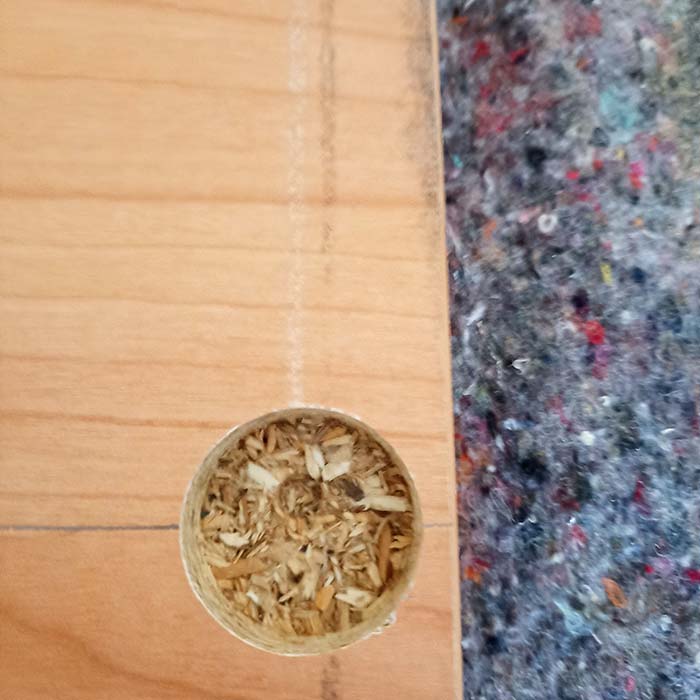
First, the old, unusable hole needs to be widened. To do this, I used a 35mm Forstner bit.
To ensure the hole was drilled perpendicular to the surface without needing a drill press, I used the jig shown in the photo. This jig was originally designed for installing snap hinges but turned out to be incredibly useful in this situation too.
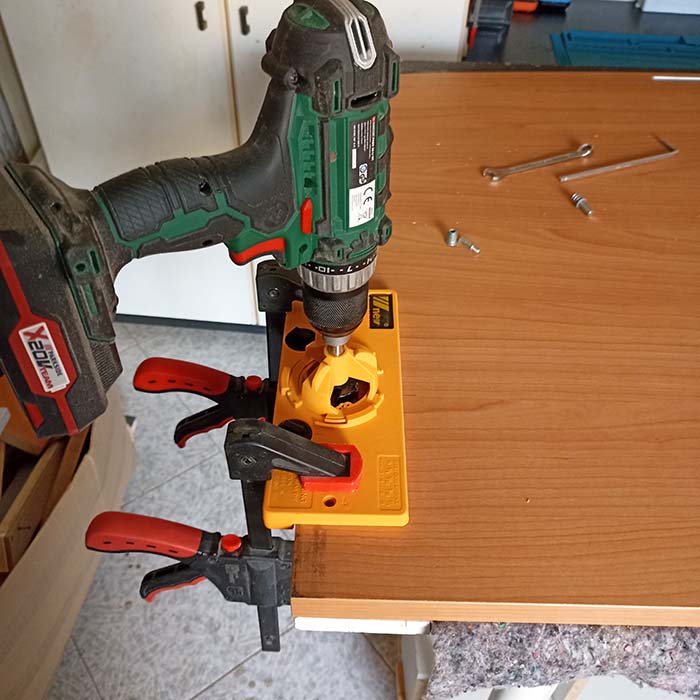
Before drilling, I adjusted and secured the depth stop collar on the drill bit to ensure a drilling depth of 15mm. This way, I was sure not to go beyond that depth and risk breaking through the surface on the opposite side.
2) Creating a Wooden Plug
I then used a hole saw mounted on a drill press (again, with the 35mm bit) to cut these plugs out of plywood. The plywood I used had a thickness of 15mm, which matched the depth of the hole I drilled in the shelf.
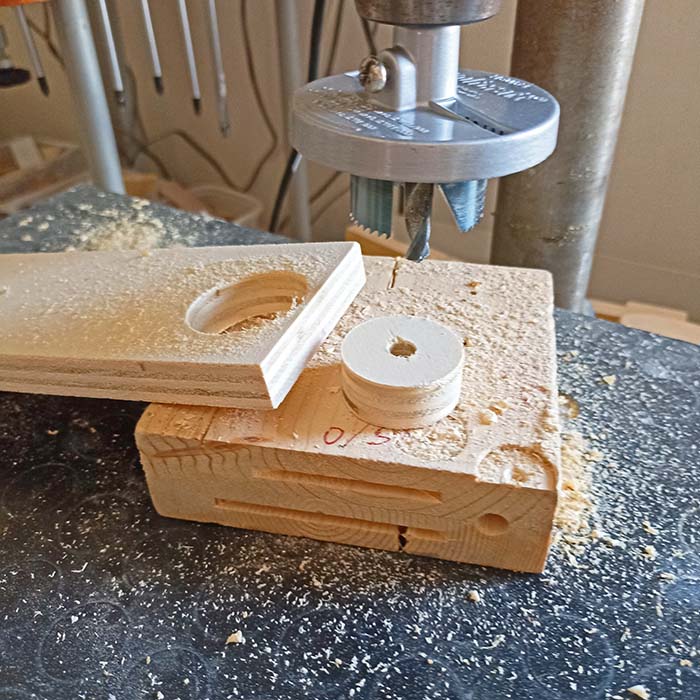
The plug made this way fits precisely (with a tiny bit of play) into the hole drilled in the shelf with the Forstner bit.
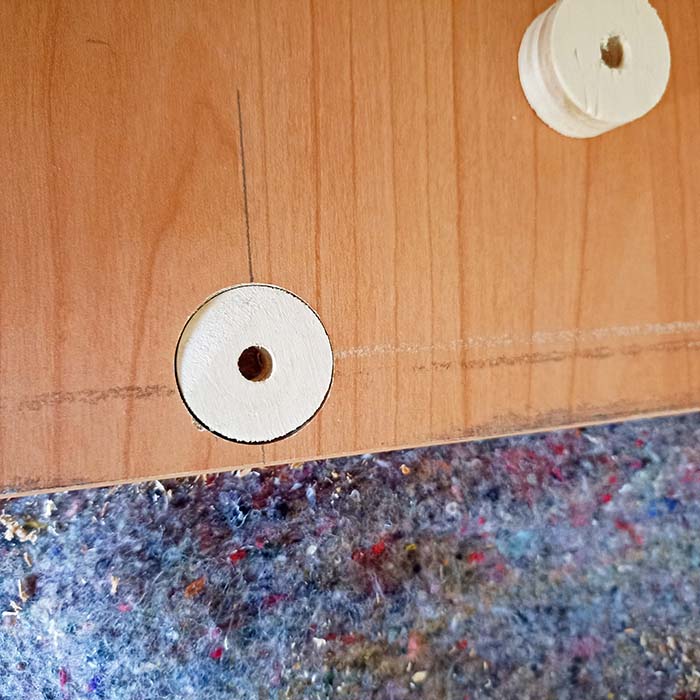
3) Glue the Plug into the Hole and Screw in the Threaded Insert
Apply a generous layer of glue (but not too much) to secure the plug in its hole. Then, if needed, enlarge the central hole with a drill to match the size required for the threaded insert. Finally, screw in the threaded insert.
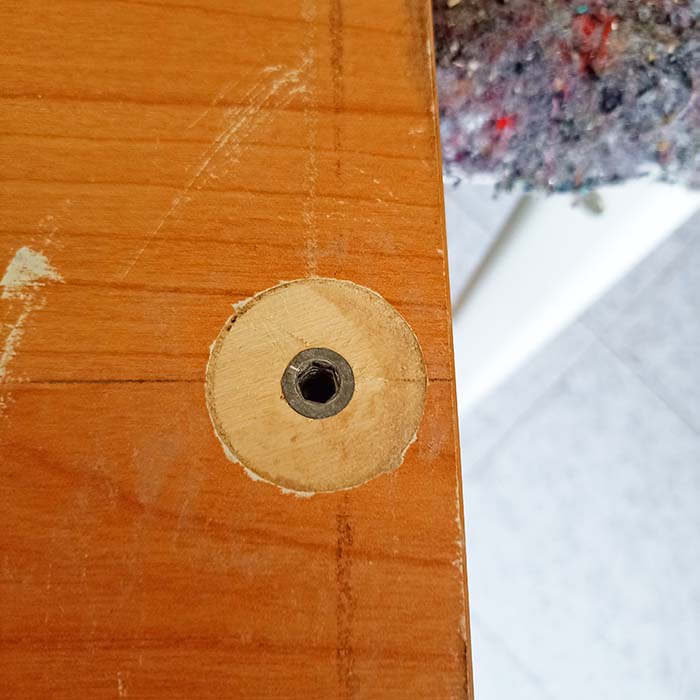
4) Screw in the Threaded Pin and Reassemble Everything
Now, you can proceed to screw the threaded pin back into this new hole and reassemble the pull-out desk shelf. This should result in a much more stable and durable setup than before.
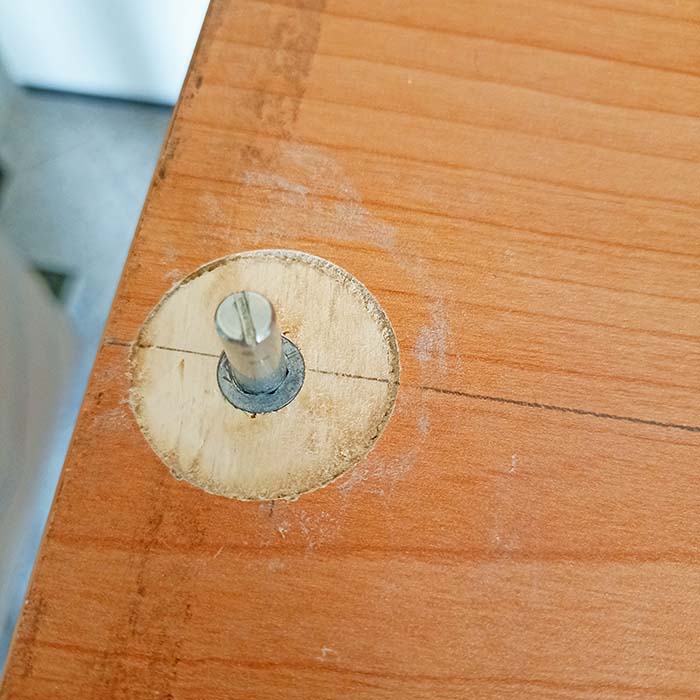
I hope this little "trick" can help anyone who, like me, needed to reinforce a threaded insert in chipboard.
Thank you all!
Mariobrossh
P.S. If you have any questions, need advice, or just want to let us know you enjoyed the article, you can visit the forum where this article originated by following this link:
https://www.ilsitodelfaidate.it/FDTForum/viewtopic.php?t=18998
Thank you
Luciano (Capitan Farloc)