
 English (United Kingdom)
  Italiano (Italia)
Indice
- A compact system for testing any car radio outside the vehicle
- Materials Used
- Tools Required
- Difficulty, Time and Cost
- The 12V Power Supply: the Heart of the System
- The Enclosure: a Creative and Functional Reuse
- Preparing the Enclosure and Ventilation Holes
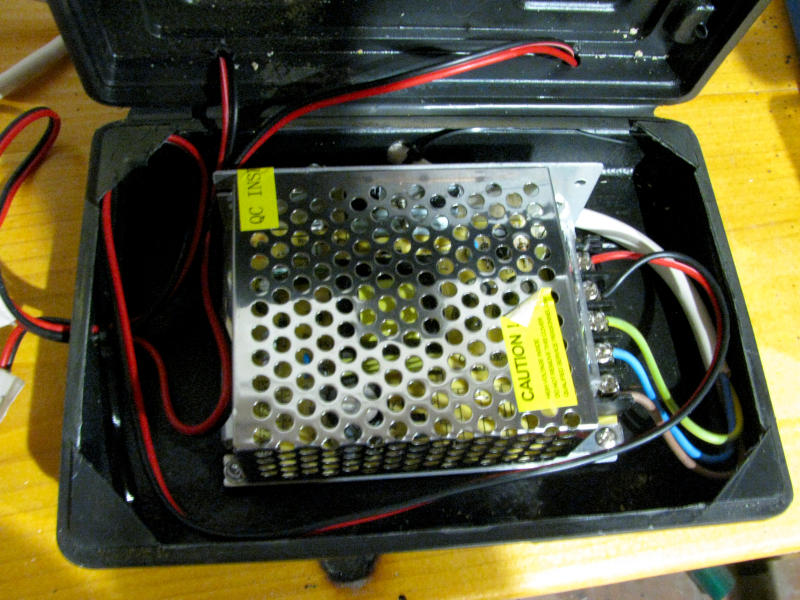
- Positioning the Power Supply
- Securing the Power Supply with Screws and Nuts
- ISO Connectors for Car Radios
- Wiring Diagram
- Extending the Wires and Making the Connections
- Preparing the Speakers
- Mounting the Speakers
- Internal Wiring and Cable Routing
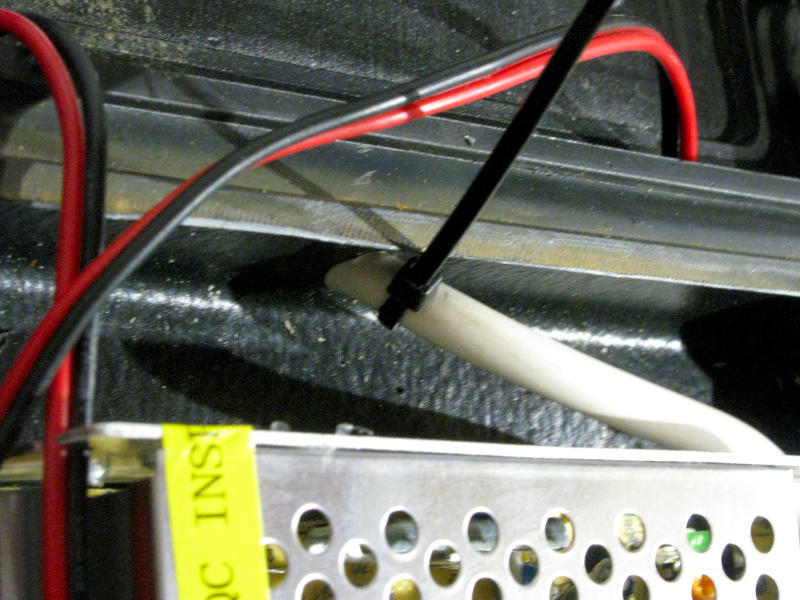
- Securing the Mains Power Cable
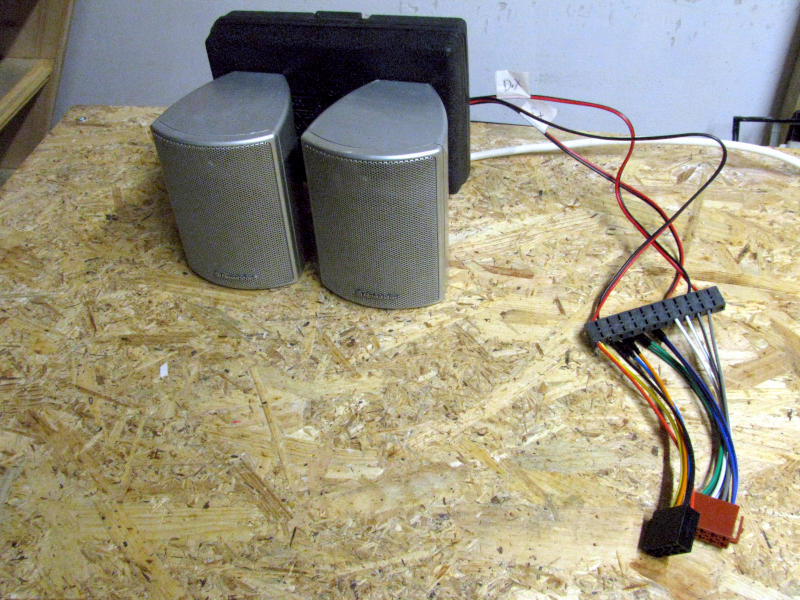
- Final Result After Assembly
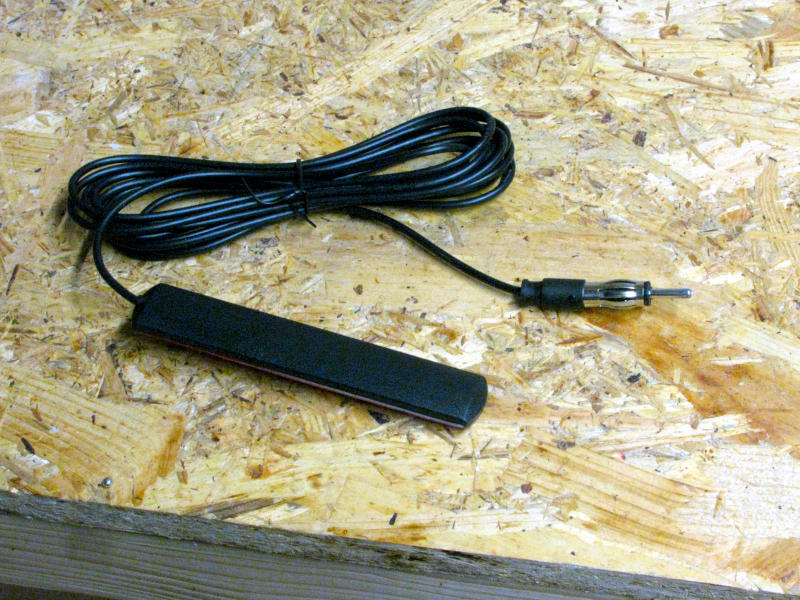
- Adding the Internal FM Antenna
- Testing the Car Radio
- Conclusions and Acknowledgments
A compact system for testing any car radio outside the vehicle
Building a multifunction car radio test bench is the ideal solution for anyone who needs to power up, check or troubleshoot a car radio outside the vehicle in a simple and safe way. In this project, I created a compact system that integrates a stabilized 12V power supply, built‑in speakers and an FM antenna, allowing complete testing without having to install the radio in a car.
A test bench like this is perfect for quickly checking the operation of new or used units, performing diagnostics, verifying wiring connections and evaluating both audio quality and FM reception.
Materials Used
- Stabilized 12V power supply (in my case, a power supply for LED strips)
- Rigid plastic enclosure
- Pair of small speakers
- ISO female connectors for car radio wiring
- Low‑cost internal FM antenna
- Screws and nuts for mounting the components
- Electrical wires, terminal blocks (“chocolate blocks”) or soldering + heat‑shrink tubing
- 230V mains power cable
Tools Required
- Drill or screwdriver
- Drill bits for plastic/wood (for ventilation holes and cable pass‑throughs)
- Screwdrivers (Phillips and flathead)
- Pliers and wire cutters
- Soldering iron (optional but recommended)
- Utility knife or electrician’s scissors
- Multimeter for checking voltage and continuity
Difficulty, Time and Cost
Difficulty: Medium
This project is suitable for anyone with basic experience in low‑voltage electrical work and simple DIY tasks.
It doesn’t require advanced skills, but it does call for accuracy when making the wiring connections.
Estimated Time: 2–3 hours
The total time depends on:
- preparing the enclosure
- organizing the internal wiring
- whether you choose to solder the connections
Total Cost: €15–25
Most of the components can be reused or sourced from old equipment.
The only “mandatory” purchase is the 12V power supply, which typically costs around €10–12
The 12V Power Supply: the Heart of the System
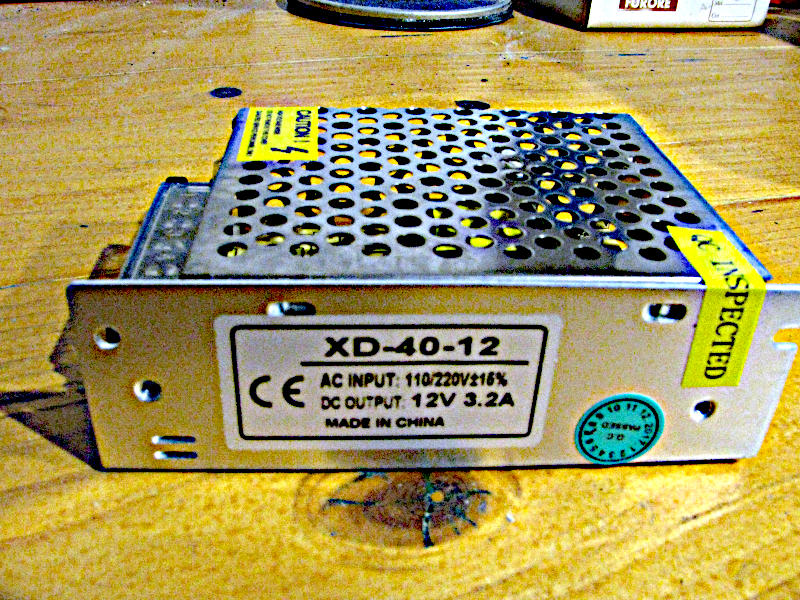
To build a multifunction car radio test bench, the first essential component is a stable 12V power source. I chose an inexpensive LED‑strip power supply rated at 3.2 amps. A power supply of this size is ideal for powering up a car radio and testing its main functions at moderate volume.
However, if you intend to use the radio at higher volume levels, it’s definitely better to use a power supply capable of delivering at least 10 to 12 amps.
The goal of this project is not to test the audio power output, but simply to power on the unit and verify that it operates correctly.
The Enclosure: a Creative and Functional Reuse
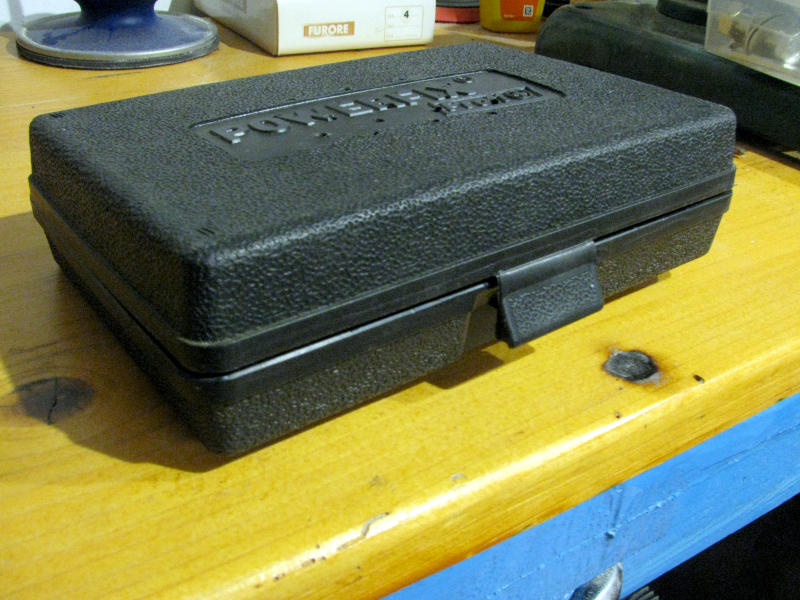
To house all the components, you obviously need a suitable enclosure. There are many ready‑made boxes on the market that would work well for this purpose, but while looking through what I already had, I found this rigid plastic case from a set of Forstner bits purchased at Lidl. Since I store the bits elsewhere, the case was unused. It looked sturdy, compact and absolutely perfect for holding the power supply and all the wiring.
Preparing the Enclosure and Ventilation Holes
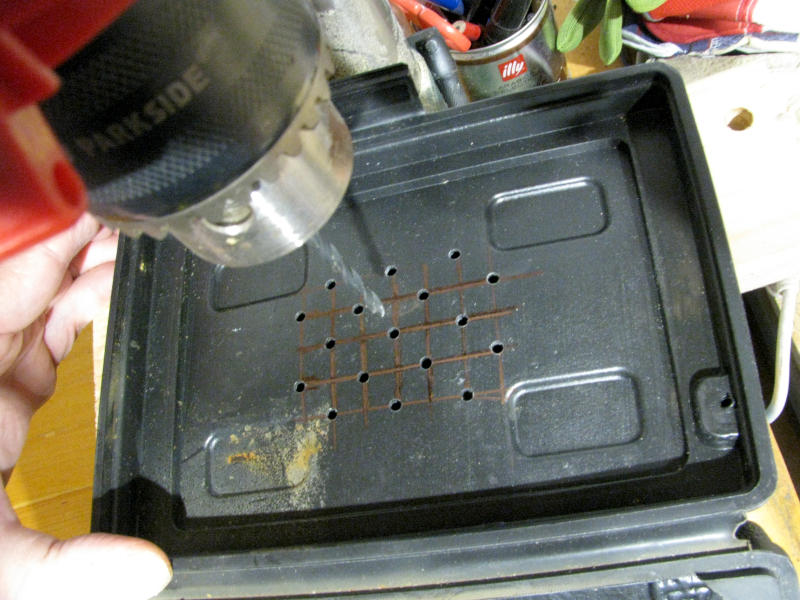
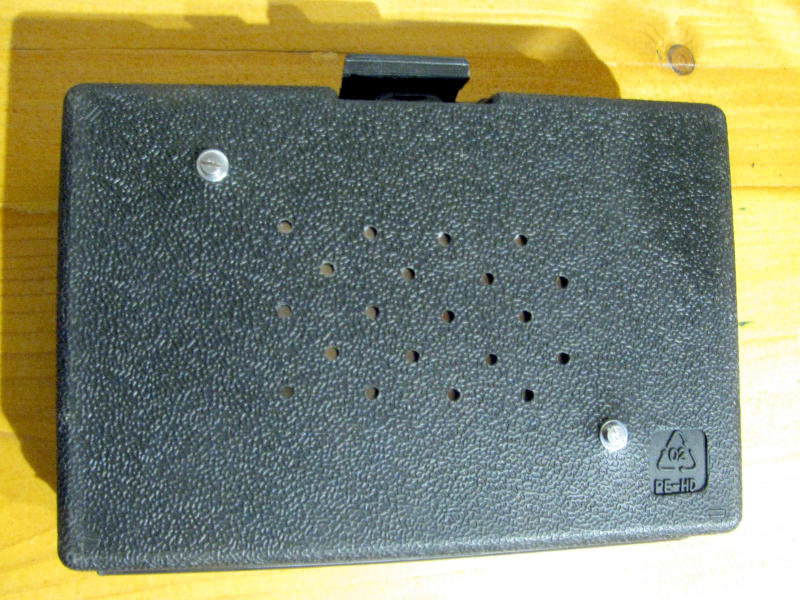
Using a utility knife, I removed the molded plastic insert inside the case where the drill bits were originally stored. Then, with a drill, I made a series of holes to ensure proper ventilation for the power supply and prevent it from overheating. The plastic is easy to work with and allows for clean, precise results.
Positioning the Power Supply
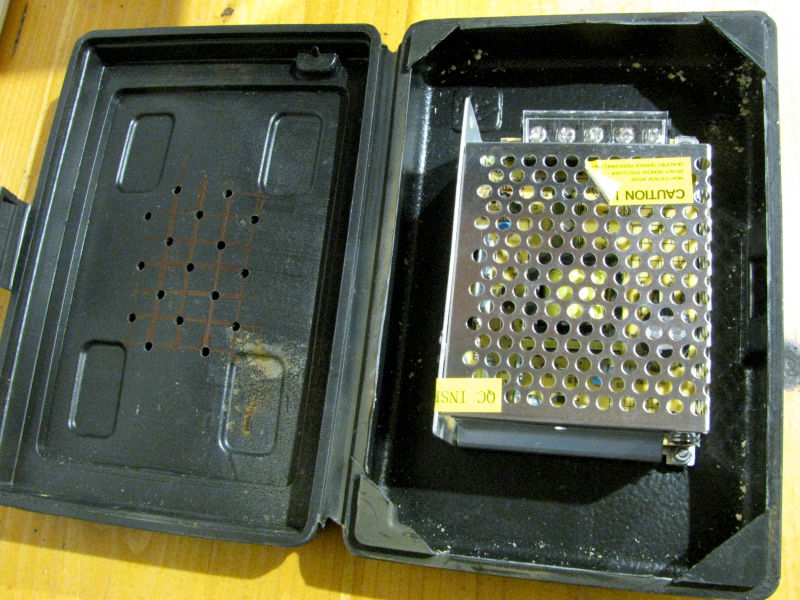
Once the enclosure was prepared, I checked the internal space and identified the ideal position for the power supply, making sure that the ventilation holes were properly aligned.
Securing the Power Supply with Screws and Nuts
To ensure a stable installation, I used M3 screws and nuts. This keeps the power supply firmly in place and prevents it from moving during transport or operation.
ISO Connectors for Car Radios
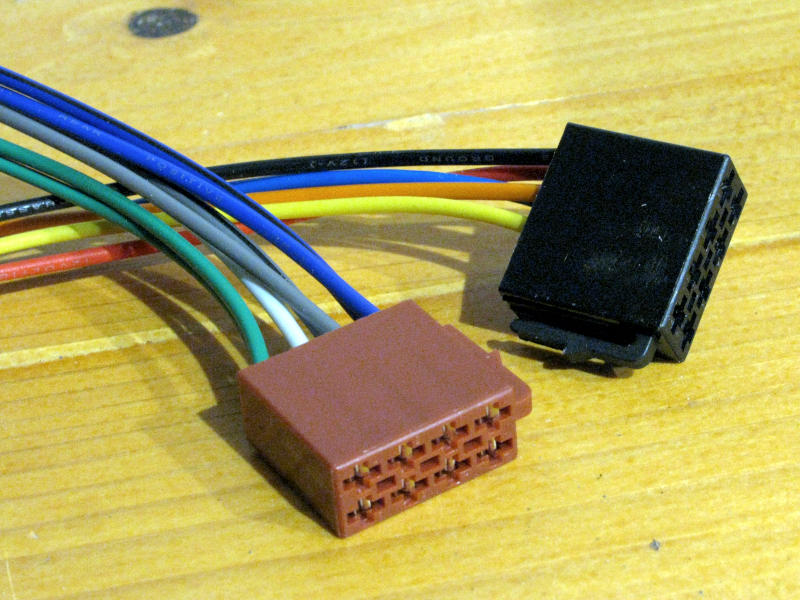
To make the test bench compatible with most European car radios, I purchased standard ISO female connectors. Modern head units that use different wiring systems are usually supplied with an adapter that converts their proprietary connector to the ISO standard, making them easy to connect to this test bench.
Wiring Diagram
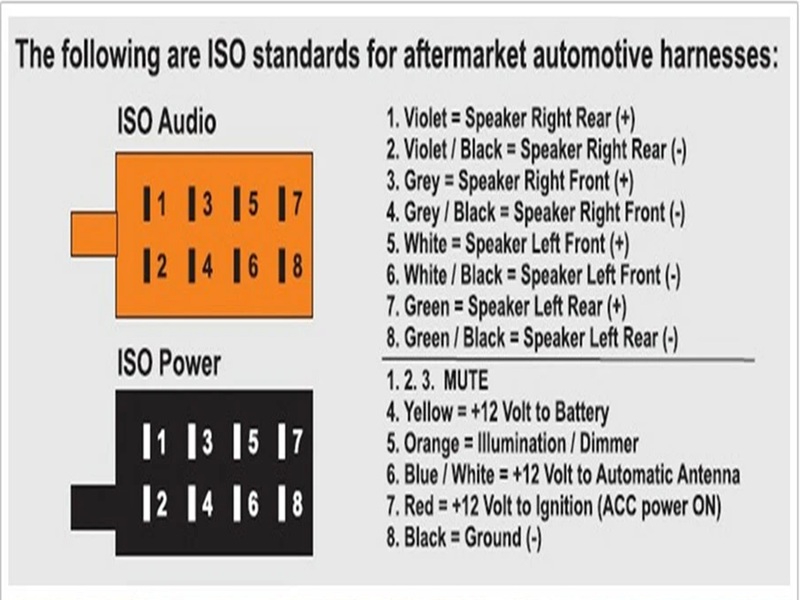
The wiring diagram for these ISO connectors is easy to find online. Below is a reference image showing the pinout of the connector I purchased, including the wire colors associated with each pin.
Keep in mind that wire colors may vary depending on the manufacturer, so always double‑check before making any connections.
Extending the Wires and Making the Connections
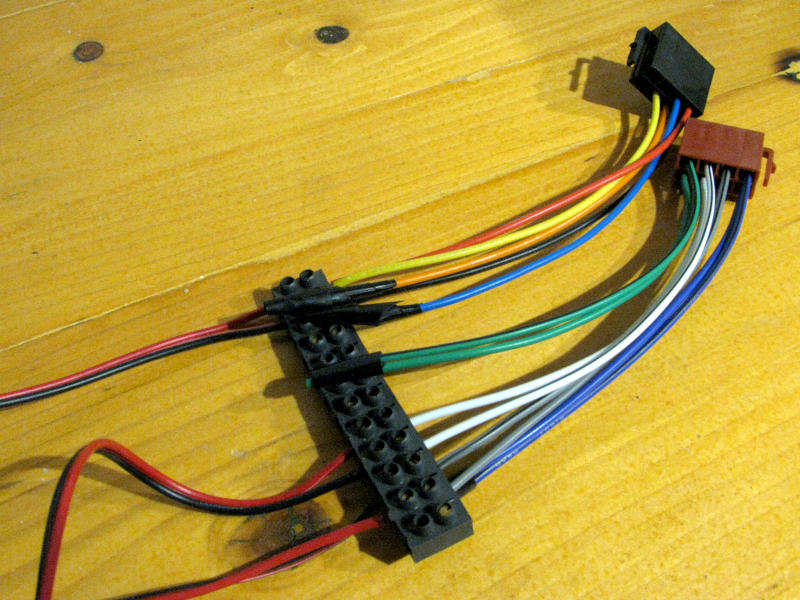
Using short red and black wire extensions, I lengthened the original wires, which were otherwise too short to work with comfortably. The connections were made using standard electrical terminal blocks. As soon as possible, I plan to replace them with soldered joints and heat‑shrink tubing for a more professional and reliable finish.
It’s worth noting that I joined the red and yellow wires together to simulate the ignition or ACC signal (pin 7 of the second ISO connector). Without this connection, the car radio would not power on.
Preparing the Speakers
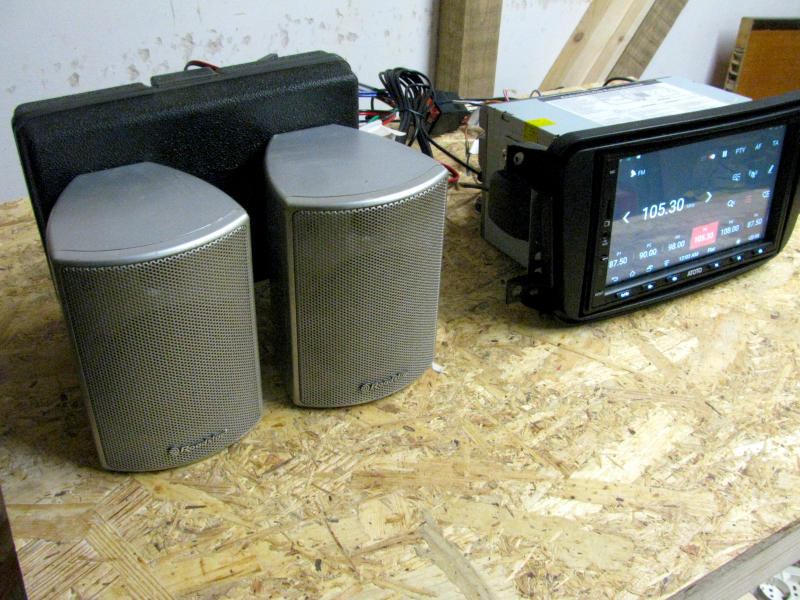
To test the audio output, I reused two small speakers from an old 4+1 stereo DVD system.
They are perfect for checking basic audio functionality without taking up too much space.
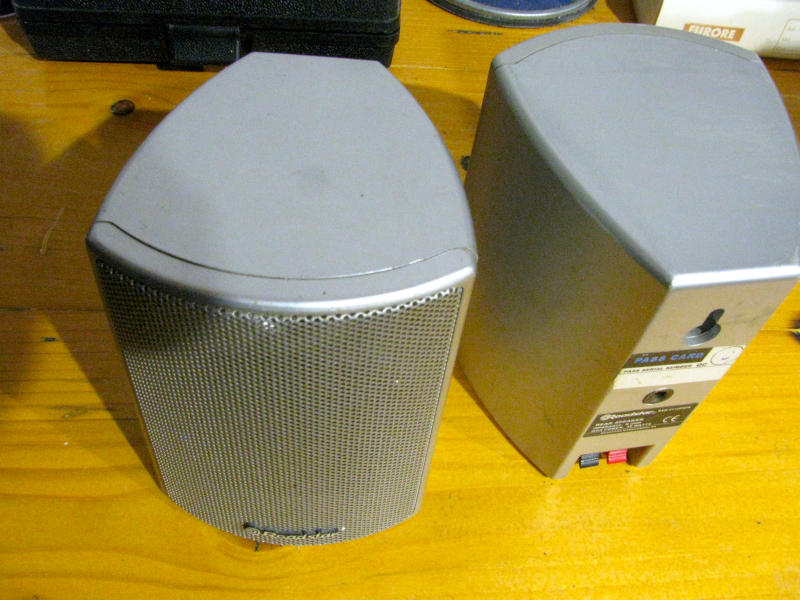
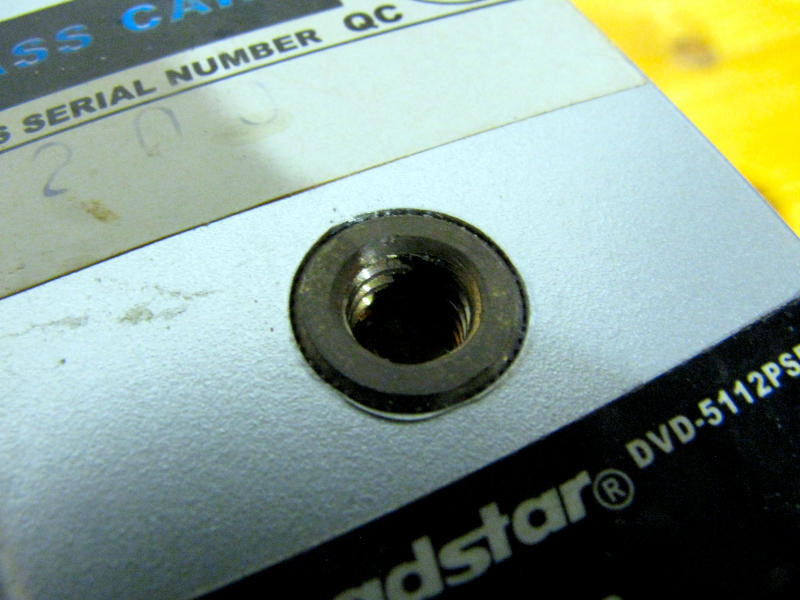
On the back of these small speakers there is an M6 threaded hole, which turned out to be extremely useful for mounting them on the outside of the enclosure. This allowed me to keep everything together in a single, compact unit.
Mounting the Speakers
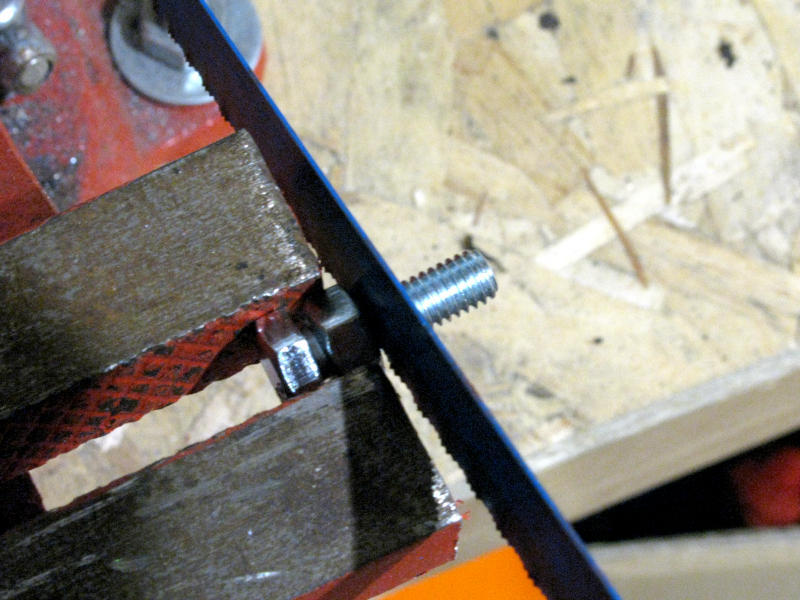
Using a hacksaw, I cut two screws to the correct length so I could securely fasten the speakers to the enclosure.
A small tip: when you cut a screw, the threads near the cut tend to get slightly crushed. By threading a nut onto the screw before cutting it, then removing the nut afterward, the nut will “clean up” the damaged threads and restore them to their proper shape.
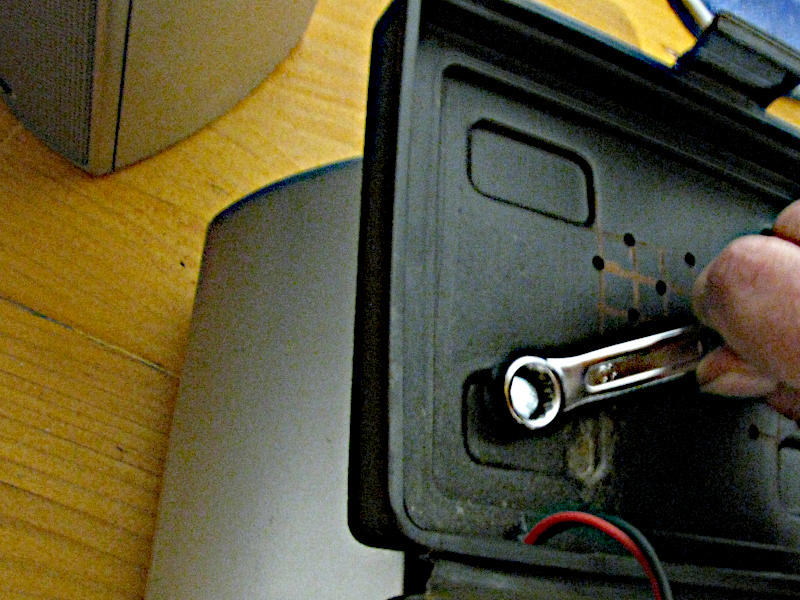
I then drilled the lid of the enclosure and mounted the speakers using the screws I had just cut to size.
Internal Wiring and Cable Routing
I drilled the necessary holes for the outgoing cables and organized the internal wiring for the power supply, audio lines and mains connection, keeping everything neat and well‑arranged.
Securing the Mains Power Cable
To prevent the mains power cable from pulling on the terminal blocks — which could cause the wires to come loose or even break — I secured it inside the enclosure using a hook‑and‑loop cable tie. This keeps the cable firmly in place and avoids any strain on the electrical connections.
Final Result After Assembly
Once everything was assembled, this is how my Multifunction Car Radio Test Bench looks.
The cable with the terminal block isn’t particularly elegant, though, so I’ll soon remove the terminal block and join the wires directly by soldering them and protecting the joints with heat‑shrink tubing. I’ll also group all the cables together inside a braided sleeve to give the whole setup a more professional finish.
Adding the Internal FM Antenna
To complete the setup, I added a small and inexpensive internal car‑radio antenna, which is more than sufficient for testing FM reception.
Testing the Car Radio
Once the car radio was connected, the system performed flawlessly: it powered on immediately, delivered clean audio and showed no electrical interference.
Conclusions and Acknowledgments
This Multifunction Car Radio Test Bench was created out of the need for a simple, compact and always‑ready tool to test new or used car radios without having to install them in a vehicle. With just a few materials, some basic skills and a handful of practical tricks, it’s possible to build a very useful system — perfect for checking power‑on, functions, audio output and FM reception with complete ease.
I would like to thank all the forum members who followed the project, shared comments and offered suggestions. Exchange and collaboration are always the best part of DIY.
If you’re interested in other DIY projects for your vehicle — whether it’s a car or a motorcycle — you can find more here: Cars and Motorcycles
A DIY greeting from Luciano (Capitan Farloc)