
 English (United Kingdom)
  Italiano (Italia)
Indice
- Materials Needed to Build the Toy
- Which Wood to Use
- The Fabric Ribbon
- The Nails to Attach the Ribbon
- Let’s Get Started on Building
- Marking and Preparing for Cutting
- Cutting the Pieces to Size
- Assembling the Pieces with the Fabric Ribbon
- Cutting the Fabric Ribbons
- Final Effect of the Creation
- The Finished Toy
- How to Play with the "Jacob's Ladder"
The "Jacob's Ladder" is a traditional folk toy that takes its name from a passage in the Bible, where Jacob, during a journey through the desert, dreamed of a multitude of angels ascending and descending a ladder between heaven and earth. This toy gives the illusion of an object endlessly descending down a staircase.
If you're looking for a simple project to create a fun toy that can also involve your children in the making process—combining creativity, entertainment, and a touch of tradition—building a "Jacob's Ladder" might just be the experience you're after.
Materials Needed to Build the Toy
To create this toy, you'll only need a few things, specifically:
- A wooden strip
- A fabric ribbon
- Small nails
Let’s Take a Closer Look at the Materials I Used to Build This Toy
Which Wood to Use
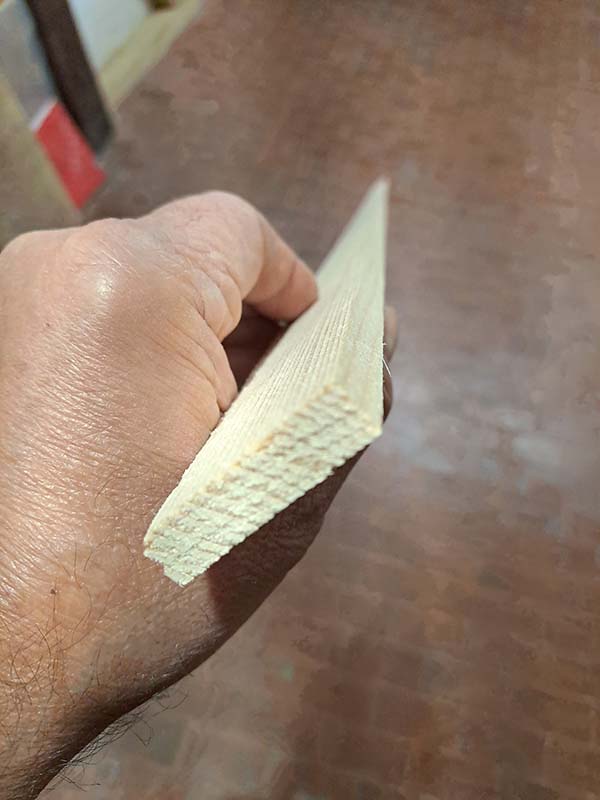
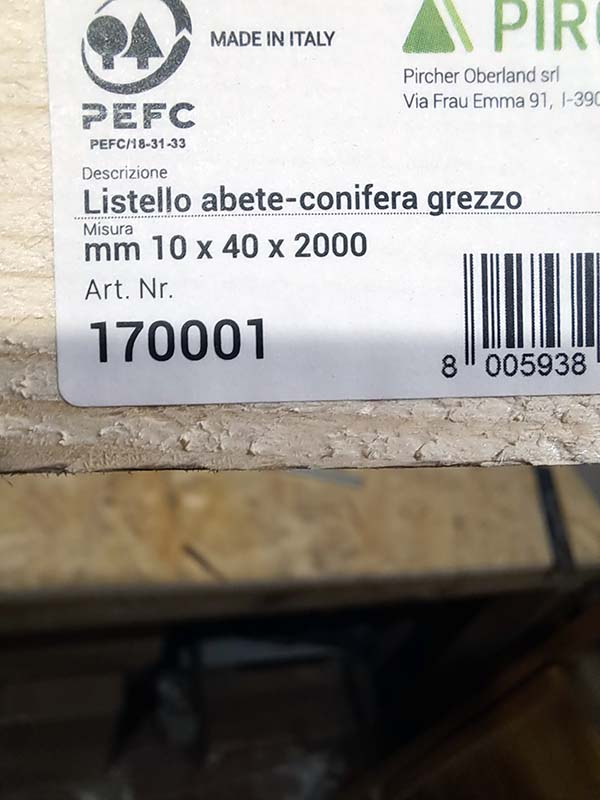
For the wood, I used a spruce strip that’s 4 cm wide and 1 cm thick—affordable and lightweight, making it an ideal choice if you're purchasing materials. However, if you happen to have any leftover wood, that works perfectly fine too! In fact, a harder and heavier wood could even improve the movement of the pieces.
The dimensions can vary slightly, but not too much. I believe a width of up to 5 cm and a thickness of 1.5 cm should work well. Going beyond that might result in a toy that’s too bulky and heavy.
The Fabric Ribbon
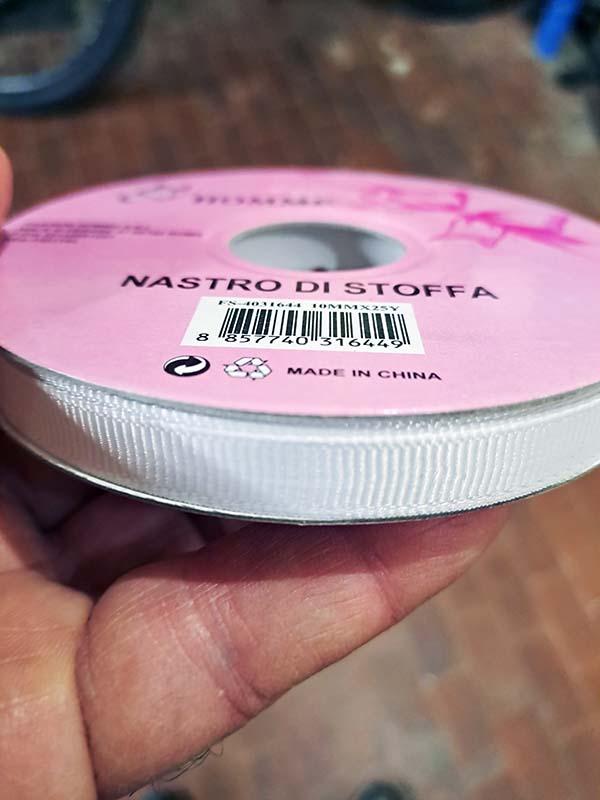
For the ribbon, I used a fabric ribbon that can easily be found in haberdasheries. Cotton or synthetic fibre ribbons work well, but satin ribbons tend to fray too much and are not suitable for this purpose. Elastic ribbons are also not recommended.
With the wooden strip I used (4 cm in width), I chose a ribbon 1 cm wide, as three ribbons will need to be placed side by side with a few millimetres of space between them. If you’re using wider wooden strips, slightly wider ribbons can also be used.
The Nails to Attach the Ribbon
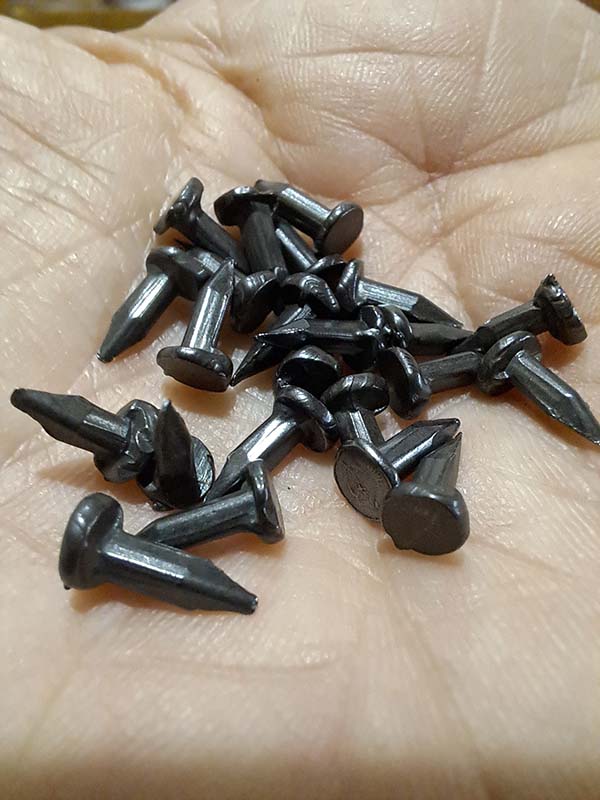
Given the small dimensions of the wooden strip, the nails you'll need should be quite small. I used square-section nails that were traditionally used by cobblers or upholsterers, often referred to as “semenze” or “sementi” nails. Just a handful of them will suffice.
Let’s Get Started on Building
The toy consists of several small wooden blocks, connected with fabric ribbons. I used 8 blocks, but you can use 6 or even 10. Adding more blocks will certainly enhance the visual effect; however, I wouldn’t recommend going beyond 10 pieces. If the toy becomes too long, a child might find it difficult to play with, as holding it at arm's length could cause it to touch the ground.
Using my 4 cm wide wooden strip, I marked out and cut blocks that were 6 cm long. Naturally, if you’re using a 5 cm wide strip, the blocks should be at least 6 or 7 cm long to maintain proper proportions.
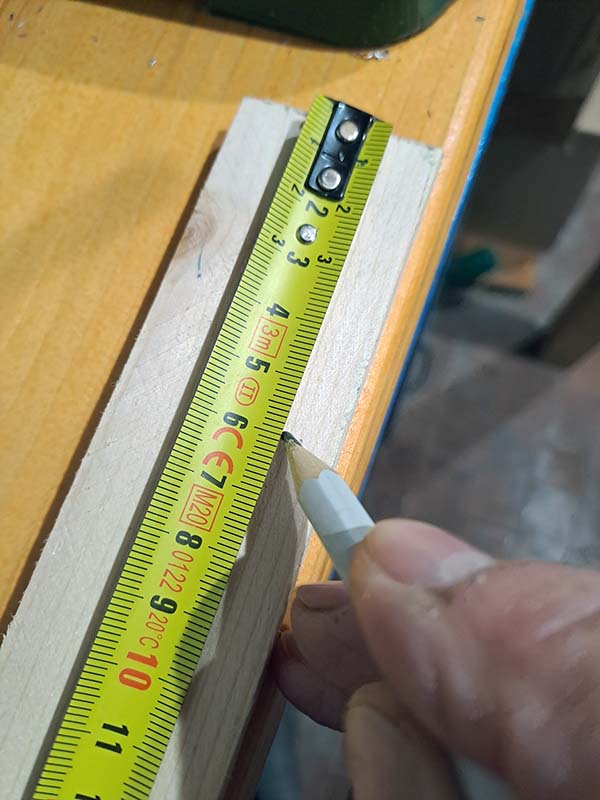
Marking and Preparing for Cutting
Once the markings were made, I used a carpenter's square (though a simple school set square works just as well) to draw crosswise lines. These served as a guide to ensure the cuts were as close to 90 degrees to the edge as possible.
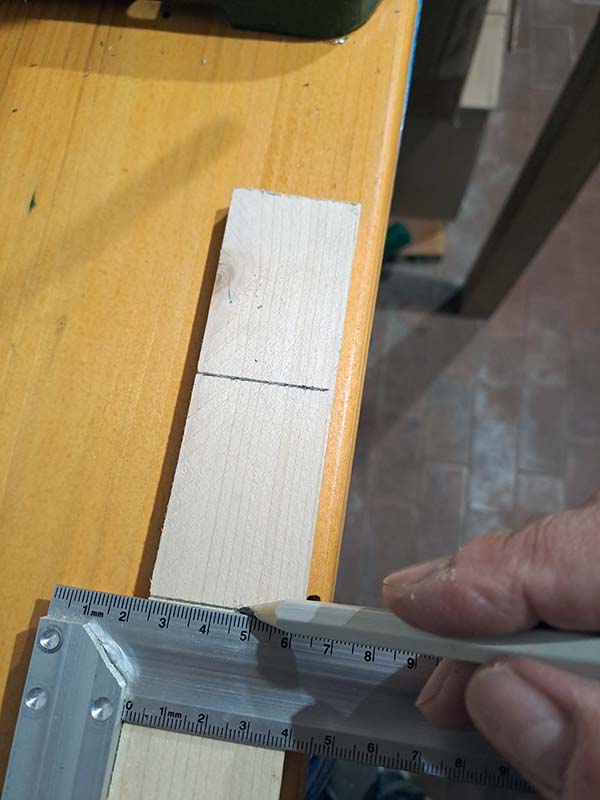
Cutting the Pieces to Size
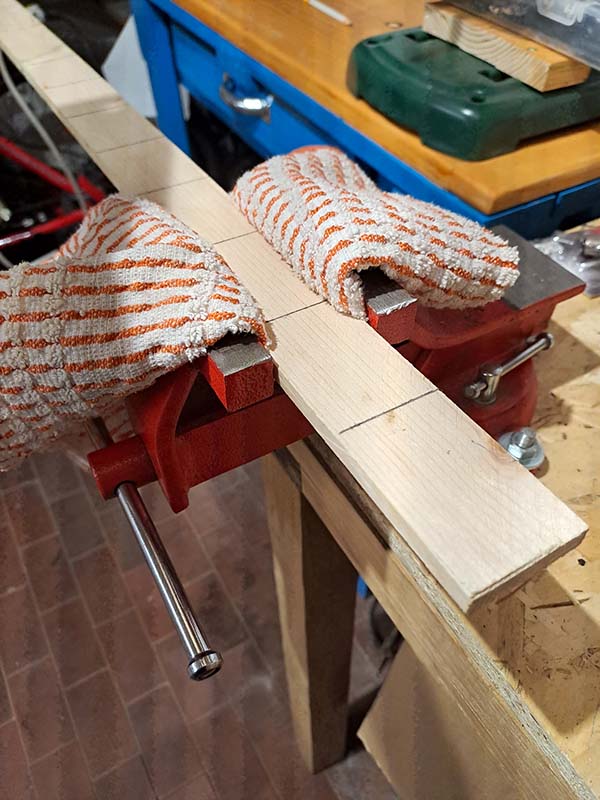
Once the cutting lines were marked, I secured the wooden strip in a vice to make the work easier. It's not strictly necessary to use a vice—you can simply hold the wood on the table with one hand and cut the piece that extends beyond the table using a saw with the other hand. However, using a vice definitely makes the process more manageable.
Since I don’t have a wooden carpenter’s vice, I improvised with a metal carpentry vice. To prevent the metal from damaging the wood, I placed a cloth between the vice and the wooden strip.
Using a Japanese saw (it was the one I had handy, although any wood saw with fine teeth will do), I carefully made the cuts, ensuring to cut precisely along the pencil line. This helped guarantee that the cuts were perpendicular.
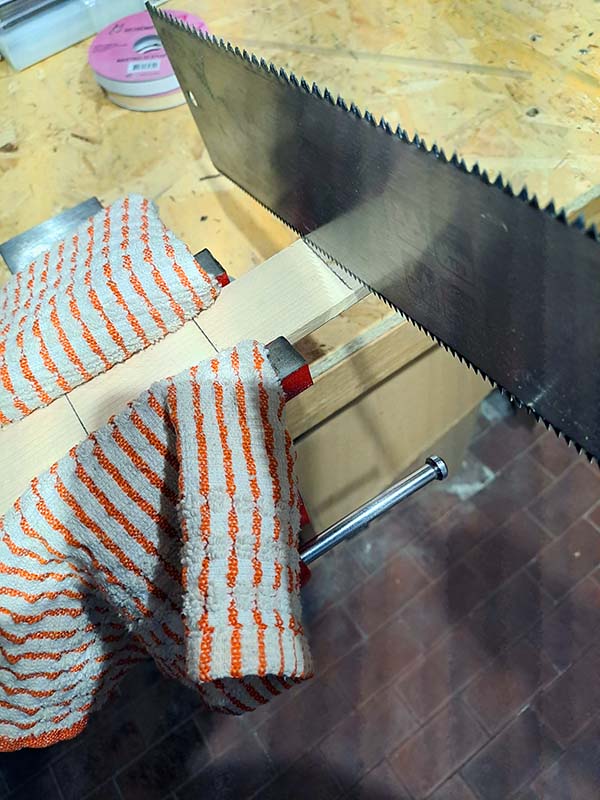
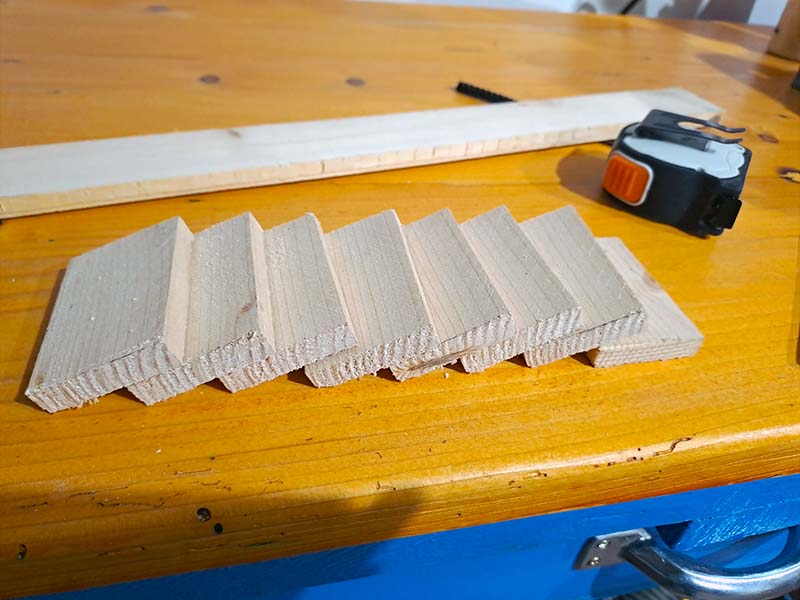
At this stage, you should have eight wooden blocks of equal size (minor differences in length won’t cause any issues). They’re now ready to be assembled.
Assembling the Pieces with the Fabric Ribbon
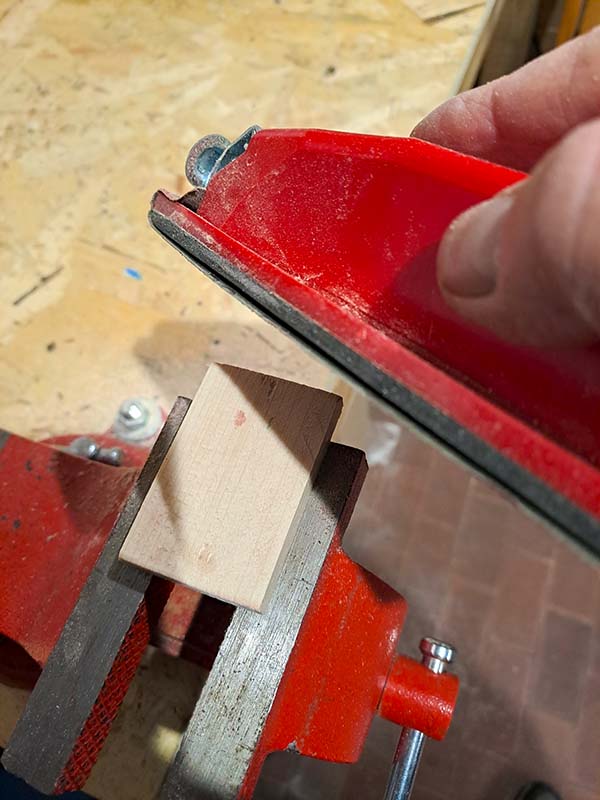
To improve the movement of the wooden blocks, it’s a good idea to round off their sharp edges with some sandpaper before attaching the fabric ribbons.
For better handling of the sandpaper, I used a sanding block (some might call it fancily a "manual sander"), where you can attach a piece of abrasive paper sold in rolls. In the old days, carpenters used a simple wooden block and held the sandpaper in place by hand—it worked just as well!
Cutting the Fabric Ribbons
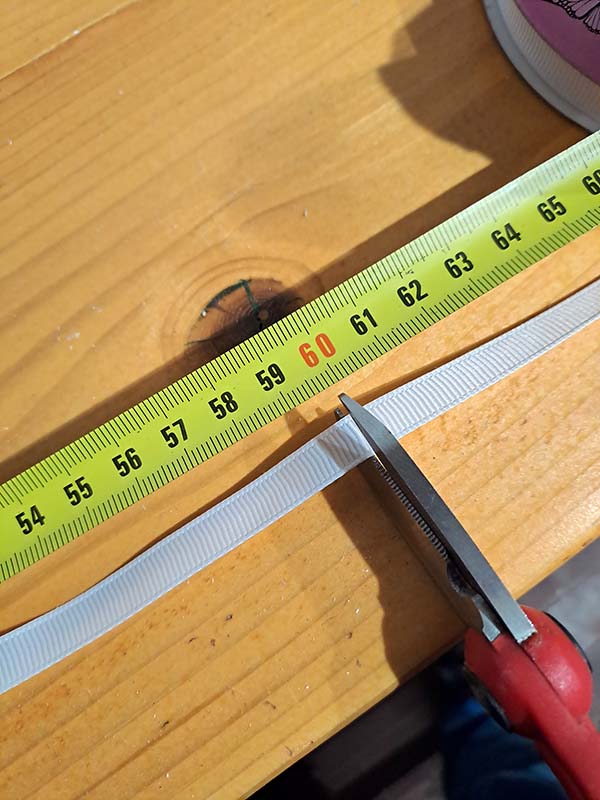
At this point, I cut three pieces of fabric ribbon, each 60 cm long. Naturally, the length of the ribbon pieces needs to be proportional to the size of the wooden blocks. With the dimensions I used, this length allowed for just under 10 cm of extra margin. If the blocks are larger, the ribbon length will need to increase accordingly. When in doubt, it’s best to err on the side of excess, as any surplus ribbon can be trimmed away after assembling the pieces.
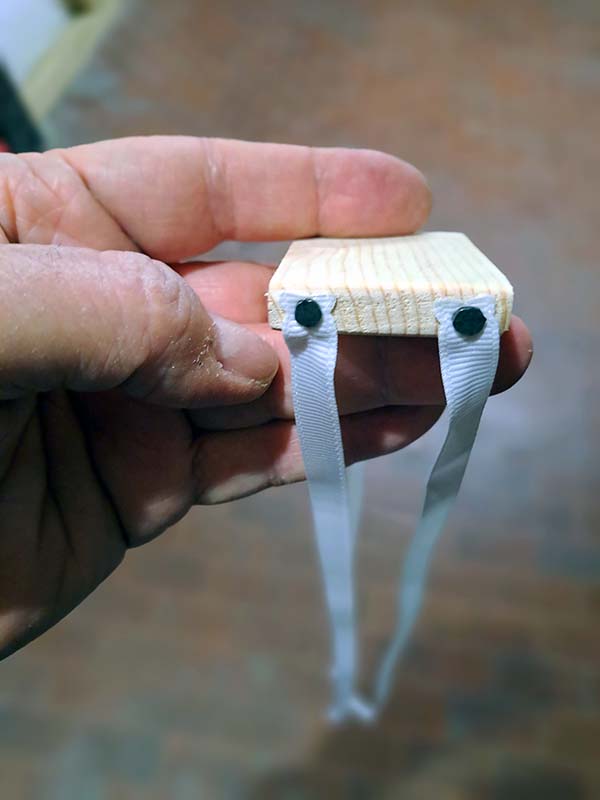
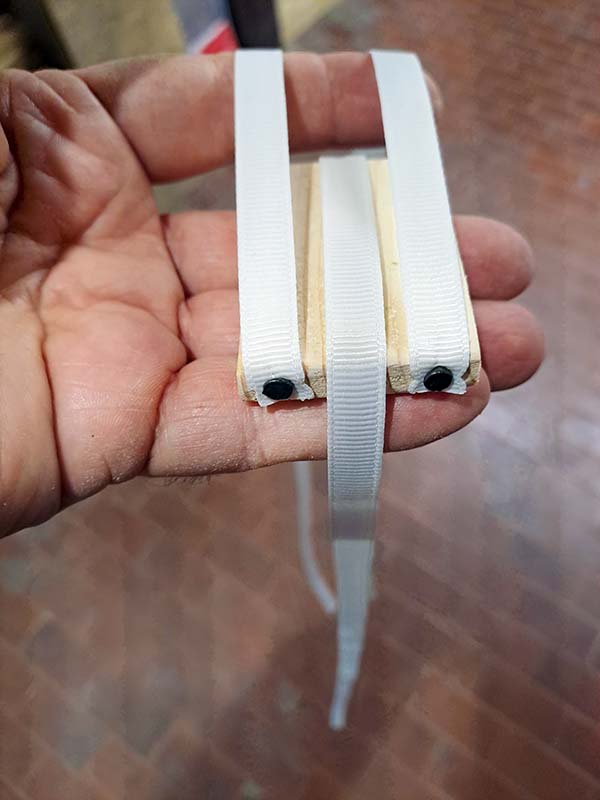
The first step is to attach two pieces of ribbon to the narrowest edge of one of the wooden blocks you’ve already cut. Use a small nail for each ribbon to secure them. The ribbons should be positioned towards the outer edges, just a few millimetres away from the corner of the longer side, as shown in the photo.
The third ribbon should be attached, again using a small nail, to the centre of the opposite edge of the block. Once secured, all three ribbons need to be brought over to the other side of the block, passing them across the top of the block itself, as shown in the photo.
After this step, we'll place the next wooden block on top of the ribbons that have just been folded over.
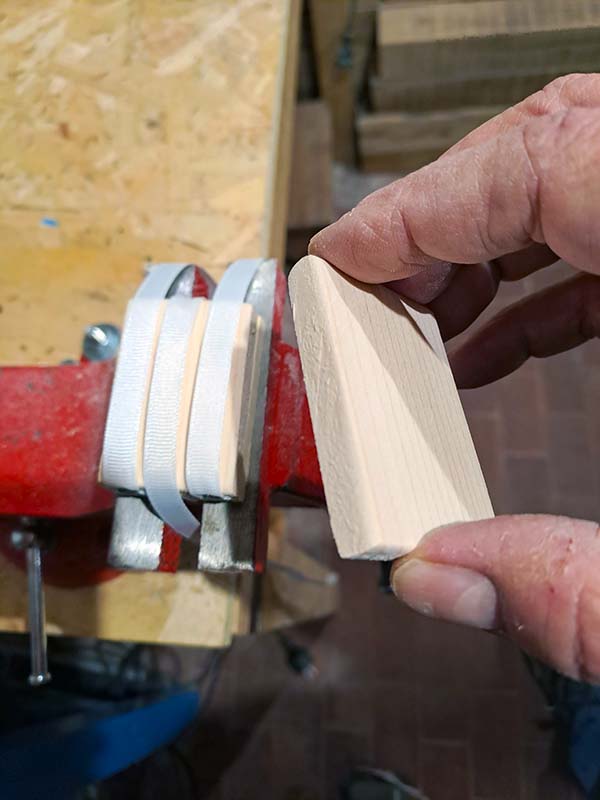
Next, fold the ribbons once more over the narrow sides of the new wooden block and secure them in place with the usual small nails.
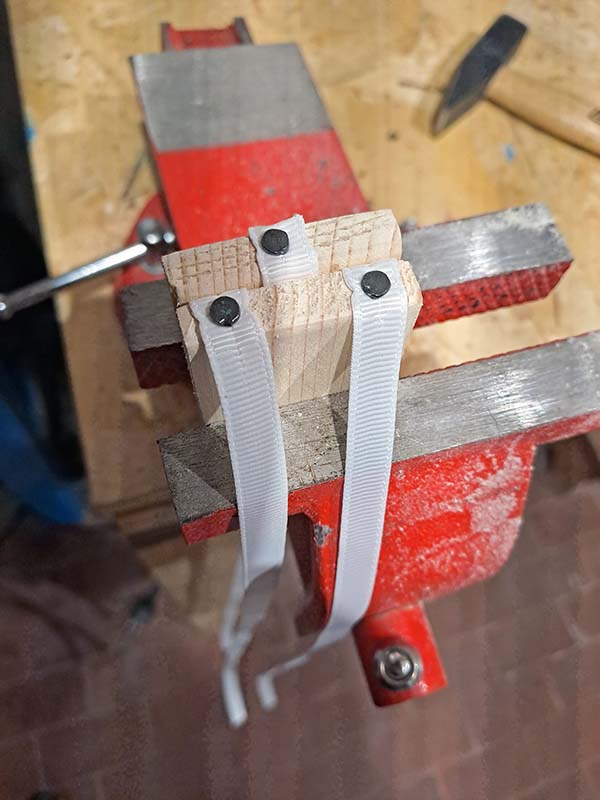
Final Effect of the Creation
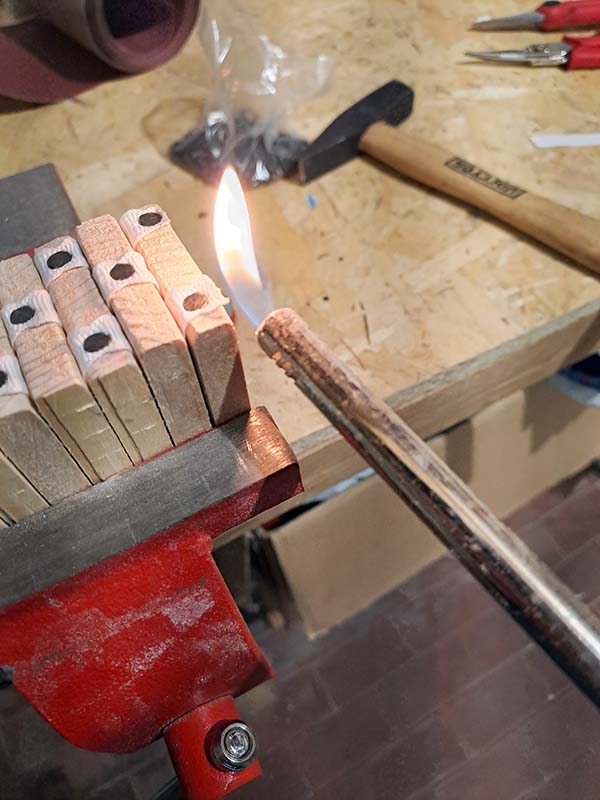
Once the last piece of ribbon is attached to the final wooden block, you’ll need to trim any excess ribbon with a pair of scissors and secure the cut ends to prevent fraying.
In my case, since I used synthetic fibre ribbon, I sealed the ends with the flame of a lighter, melting the edge to stop it from fraying. If you’re using cotton ribbon, a line of glue can be applied to stabilise the fabric weave and achieve the same result.
The Finished Toy
The toy you’ve just built will now look like this.
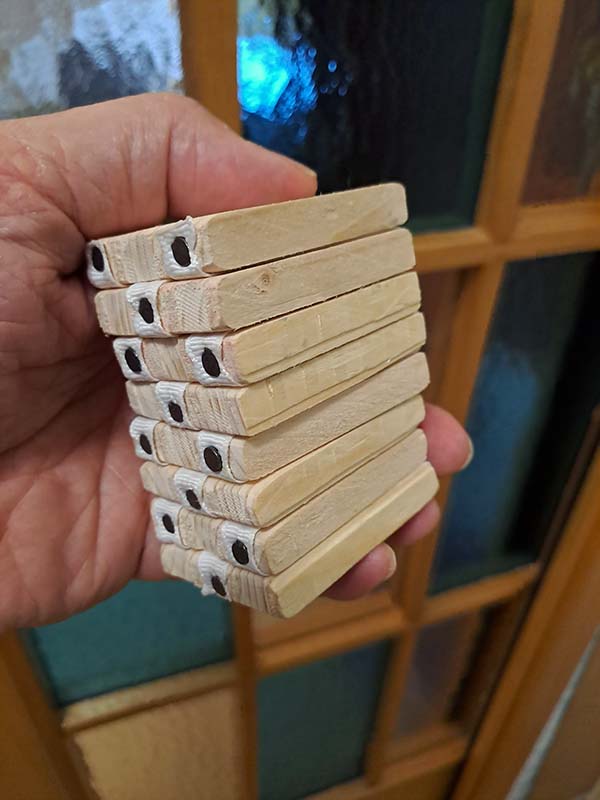
How to Play with the "Jacob's Ladder"
The game is quite simple. If you hold the top block and let go of the rest, the blocks will unfold and arrange themselves vertically, one below the other, held together by the ribbons we attached.
Now, by flipping the top block so that the bottom short side moves to the top, you'll trigger a cascading motion in each block, making them appear as though they're descending this imaginary "ladder."
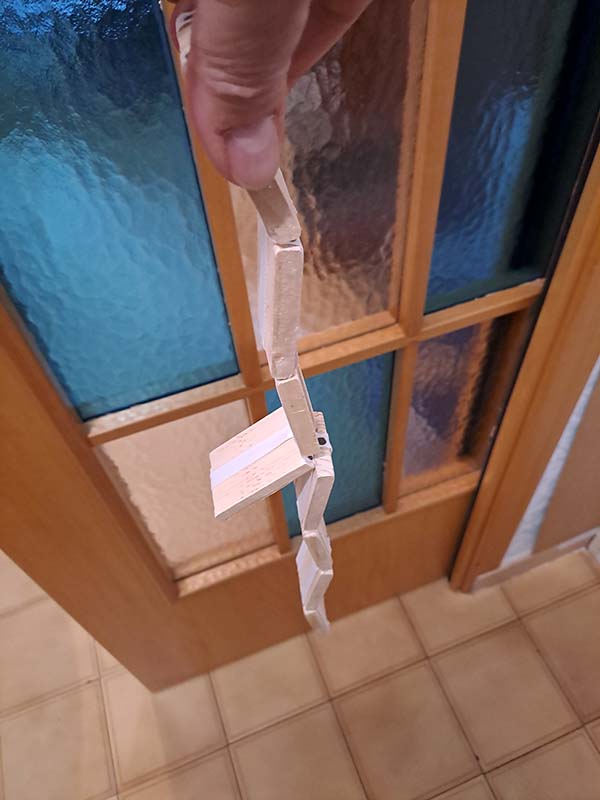
In This Video, You Can Clearly See How to Play the Game
I Hope You Enjoyed the Article and Found It Helpful
I truly did. While children today are often surrounded by modern technologies like smartphones and video games, I assure you that spending quality time together on a hands-on activity like building a toy is something incomparable. It’s an experience kids will always cherish—try it for yourself and see :-)
Thank you all, and I wish you a wonderful day!
Luciano (Capitan Farloc)