
 English (United Kingdom)
  Italiano (Italia)
Indice
- Leaking Screw-Down Tap: All It Takes Is a Few Basic Tools to Fix It Yourself
- Where to Start: Turn Off the Water Supply and Remove the Handle Cap
- Removing the Tap Handle: What You'll Find Underneath
- How to Remove the Chrome Shroud Without Scratching It
- Unscrewing the Tap Body Nut: A Handy Trick to Make It Easier
- How to Replace the Tap Washer: the Heart of the Repair
- Reseating the Tap: When It's Worth Doing and What You'll Need
- How to Use the Reseating Tool and Check the Result
- Frequently Asked Questions About Fixing a Leaking Tap (or Faucet)
- Conclusions and Thanks
Leaking Screw-Down Tap: All It Takes Is a Few Basic Tools to Fix It Yourself
Is your old screw-down tap (or faucet) dripping even when it's fully closed? Don't worry, it's one of the most common plumbing problems in the home and, fortunately, one of the easiest to sort out. In this guide I'll show you step by step how to stop the leak by replacing the internal washer, using just a few basic tools that any DIY enthusiast will already have to hand. With the help of the photos and practical tips, you'll have it working like new again in no time, no plumber required!
Where to Start: Turn Off the Water Supply and Remove the Handle Cap
Before touching the tap, the first thing to do is turn off the water supply valve — usually found under the sink or close to the fixture itself — to avoid any unwanted flooding. Once that's done, you can start dismantling from the top handle, which is held in place by a retaining screw. This screw may be clearly visible or hidden beneath a small decorative cap: in the latter case, you'll need to remove the cap first to gain access to the screw. There are two types of cap to look out for: press-fit caps, like the one shown in the photo, can be removed easily by gently levering them off with a flat-head screwdriver; threaded caps, on the other hand, are recognisable by their knurled outer edge, which allows you to grip them with your fingers and unscrew them without any tools at all.

Removing the Tap Handle: What You'll Find Underneath
Once the retaining screw is out, the handle should slide off fairly easily when pulled upwards. At this point the tap body will become visible — made of brass, with two stacked nuts on top of each other: the upper one, which is smaller, is where the tap spindle emerges and is easily accessible; the lower one, however, is the nut we need to remove in order to reach the washer. To get to it, we'll first need to take off the decorative chrome shroud (also called an escutcheon) that covers it — and that's exactly what we'll be dealing with in the next step.

How to Remove the Chrome Shroud Without Scratching It
With the handle out of the way, we can now deal with the decorative chrome shroud (or escutcheon) that covers the lower nut of the tap body. Simply grip it firmly with both hands and unscrew it anticlockwise (counterclockwise) to slide it off upwards. If it turns out to be stuck or particularly stiff, the ideal tool is a rubber strap wrench, which gives a secure grip without any risk of scratching the chrome surface. Alternatively, you can use an adjustable spanner (or pipe wrench), but only if you protect the shroud carefully by wrapping it with a piece of old inner tube or a thick strip of cloth between the tool and the metal — to avoid unsightly scratches. Once unscrewed, the shroud will slide off easily, finally exposing the tap body and the nut we'll need to remove in the next step.

Unscrewing the Tap Body Nut: A Handy Trick to Make It Easier
With the chrome shroud removed, the tap body nut is finally within reach and can be unscrewed using an open-ended spanner (or wrench) of the right size. Before you do, though, here's a little trick I always recommend: temporarily refit the handle onto the spindle and open the tap slightly. This way the internal mechanism won't be under any tension, making the whole operation much smoother — without that annoying resistance you get when trying to unscrew the body with the tap in the closed position. Once you've done that, simply fit the spanner (or wrench) onto the nut and turn it a few times anticlockwise (counterclockwise) to free the tap body from its seat.

How to Replace the Tap Washer: the Heart of the Repair
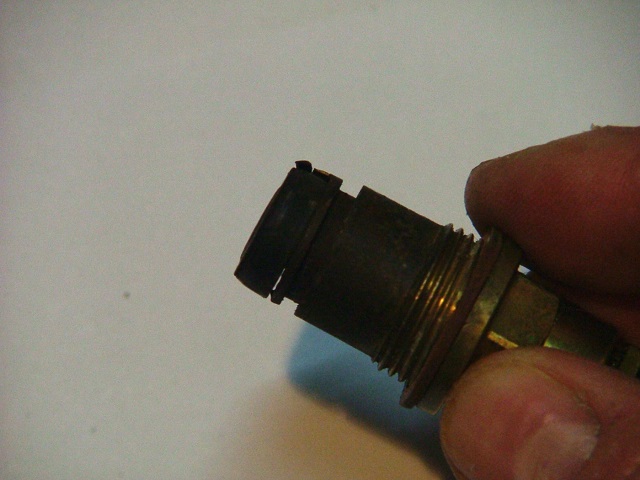
Once the tap body has been extracted from its seat, it will look just like the one in the photo: a brass assembly with an external thread and, at the top, the internal piston. By turning the spindle with your fingers you can immediately check how the mechanism works: the piston moves up and down, and in its lowered position the rubber washer fitted to its tip presses against the bottom of the tap seat, cutting off the flow of water. It is precisely this washer — known in the trade as a "tap washer" (or "faucet washer" / "seat washer" in American English) — that over time wears out, hardens or deforms, causing the tap to drip even when fully closed.
To replace it, you'll first need to remove it from its seat: on some models it's held in place by a small nut or screw, on others it's simply pushed in or screwed directly onto the piston. In all cases, once removed, it's well worth taking the old washer along to your local hardware shop (or hardware store) to find a replacement of exactly the same size: both the diameter and the thickness must match precisely to guarantee a perfect seal.
Reseating the Tap: When It's Worth Doing and What You'll Need
With the new washer fitted, in most cases the repair is already complete and you can go ahead with reassembly. However, if the tap is particularly old or has been dripping for a long time, it's worth carrying out one additional step: reseating the tap. This involves smoothing out the internal surface against which the washer presses — a surface that over time can become scored or deteriorated, compromising the seal even with a brand new washer in place.
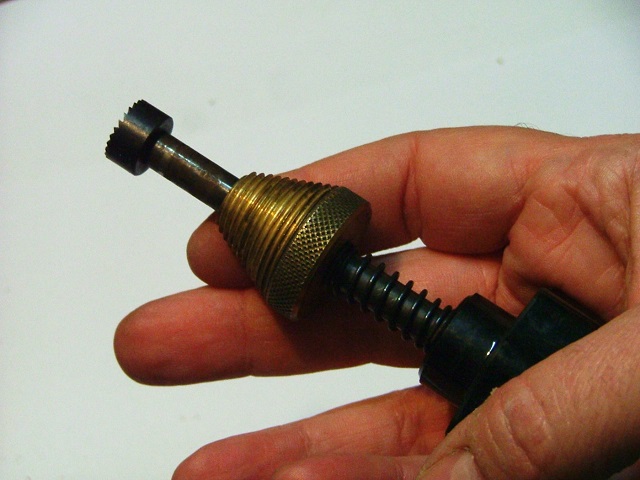
To carry out this operation you'll need a specific tool called a tap reseating tool (or faucet seat grinder in American English), as shown in the photo: it consists of a threaded brass body that screws into the tap seat, and a rotating cutter at the top that scrapes and smooths the surface. It can be found at well-stocked hardware shops (or hardware stores) and plumbing supply outlets, at a generally modest cost — and once you have one, it'll come in handy for future repairs too.
How to Use the Reseating Tool and Check the Result
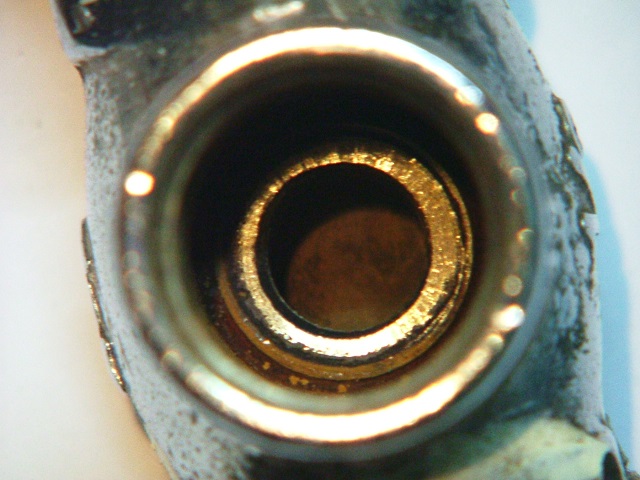
To carry out the reseating, look down into the part of the tap that's still fixed to the wall or the sink: at the bottom of the inner bore you'll find the seat — the flat circular surface against which the washer presses to stop the flow of water. Before using the reseating tool, it's worth running your fingertip gently across the seat: if you can feel any grooves, irregularities or a rough surface, then reseating is definitely needed.
At that point, screw the reseating tool (or faucet seat grinder) into the tap seat and, pressing down gently on the top knob, rotate it clockwise: the cutter will progressively scrape the surface, removing any imperfections and restoring a smooth, even finish. It's important to work slowly and check the condition of the seat regularly by unscrewing the tool every so often and running your finger across it again to assess progress. When the surface feels smooth and uniform, the reseating is complete: you can then reassemble the entire tap in the reverse order of dismantling, and you'll find that just a gentle turn of the handle is all it takes to achieve a perfect seal — just like when the tap was new.
Frequently Asked Questions About Fixing a Leaking Tap (or Faucet)
How much does it cost to fix a dripping tap or faucet? The cost is minimal: a replacement tap washer (or faucet washer) can be found at any hardware shop for just a few pence, while a tap reseating tool (or faucet seat grinder) generally costs between £5 and £15 and can be reused for future repairs. Fixing the tap yourself means avoiding a callout fee from a plumber, which for a similar job can easily run to anywhere between £50 and £150.
How long does it take to fix a leaking tap? With a basic familiarity with tools, the whole job should take between 20 and 40 minutes. Most of that time goes on dismantling and reassembling: replacing the washer itself takes just a few minutes.
How do I know what size washer I need? The safest approach is to remove the old washer and take it along to your local hardware shop (or hardware store) to find a replacement of exactly the same size. Alternatively, you can measure the outer diameter with a calliper (or caliper) and pass the measurement on to the assistant.
Why is my tap still dripping after I've replaced the washer? If the tap continues to drip after the washer has been replaced, the most likely cause is that the internal tap seat is scored or uneven. In that case, you'll need to carry out a reseating, as described in the sections above.
Can this method be used on any type of tap or faucet? This method is specific to screw-down taps (also known as compression faucets in American English), recognisable by the handle that requires several turns to fully open or close the water. Quarter-turn taps (mixer taps, ball valves or cartridge faucets) have a different mechanism and require a different approach to repair.
Do I need to turn off the water supply to the whole house? No — in most cases it's enough to close the local isolator valve (or shut-off valve), usually found under the sink or close to the point of use. Only if there's no local isolator valve will you need to turn off the water at the mains (or main water shut-off valve).
Conclusions and Thanks
And here we are at the end of this guide: I hope the instructions on how to fix a leaking screw-down tap (or faucet) have given you the confidence to tackle the problem yourself, without having to call a plumber for a job that is, all things considered, well within anyone's reach.
If after replacing the washer the tap works correctly but the handle feels stiff or difficult to turn, the problem is likely down to the tap mechanism needing a good clean and lubrication. In that case, I'd suggest having a look at the companion guide: Stiff or Stuck Faucet? How to Disassemble, Clean and Lubricate a Screw-Type Tap
If you'd like to explore other DIY plumbing jobs, you're welcome to browse the other guides available in the Plumbing section of the site, where you'll find plenty more step-by-step practical guides.
I care a great deal about the quality and originality of the content I publish, so I'd rather it wasn't copied or republished elsewhere. That said, if you think this guide might be useful to others, I'd be really glad if you'd share the link to the page: it's the most straightforward way to spread the word and support the work that goes into every article.
Happy DIY Repairs to All
Luciano (Capitan Farloc)