
 English (United Kingdom)
  Italiano (Italia)
Indice
The hinges on kitchen cupboard doors get a lot of use, and sooner or later, one might break. But don’t worry—it’s easier to replace than you might think! In this guide, we walk you through how to swap out a broken clip-on hinge for a new one, making sure everything lines up properly so the door closes like it should. With a few basic tools and a bit of care, your cabinet door will be back in action in no time.
Introduction
This morning, as fate would have it, my better half informed me that yet another hinge on our now 25-year-old kitchen had given way. Armed with a Phillips screwdriver, a chisel, and a saw, I got to work. But here are the photos, which speak louder than a thousand words.
Removing the old hinge from the side of the cabinet
We start by dismantling the broken hinge, unscrewing the central screw.
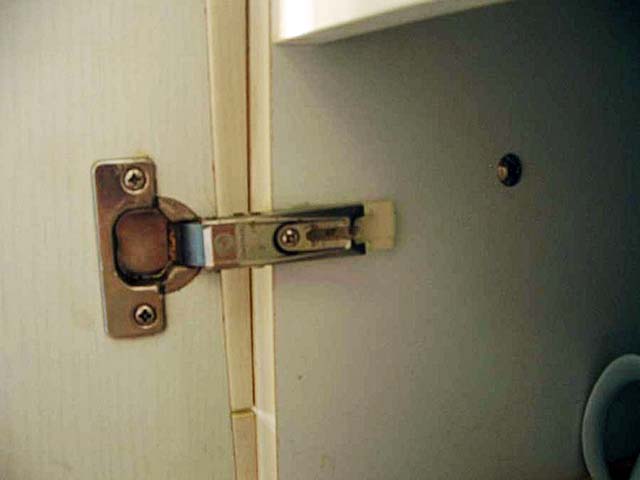
I should point out that the hinges on this kitchen are the type that don’t require screws to fasten to the side of the cabinet. Instead, they have dowels that are pressed into pre-drilled holes.
If you try to pull out the hinge base, the dowels will likely tear away part of the chipboard, damaging the hole and forcing us to carry out a repair process, which I’ve detailed in another article: How to Repair a Broken or Detached Wardrobe Hinge (by Mariobrossh)
So, to remove it without causing too much damage, we gently use a chisel or a small spatula to create a bit of space between the hinge base and the cabinet, allowing us to insert the saw.
In my case, I wasn’t particularly gentle, as the kitchen will need replacing sooner rather than later.
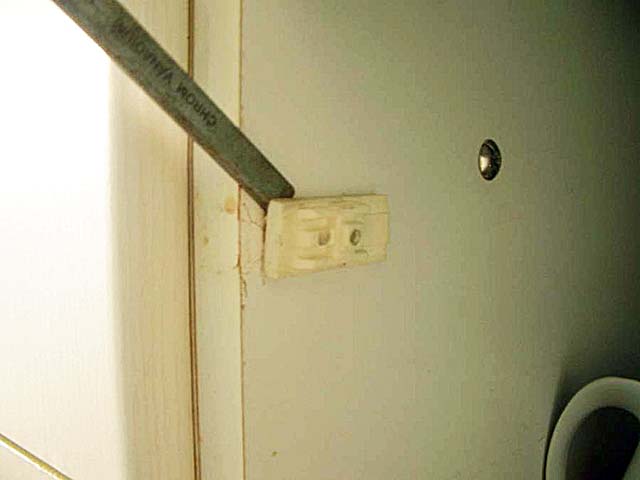
At this point, we start sawing through the plastic dowels of the hinge base. If you don’t have that particular saw, a hacksaw blade for metal will also work, but it will take more time and effort.
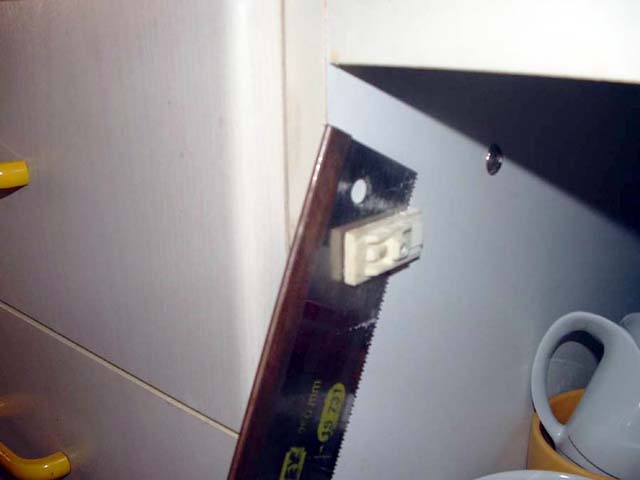
This is what the cabinet looks like once the cutting is complete. Any chipped lacquer can be covered up with a bit of white paint.

Removing the old hinge from the door
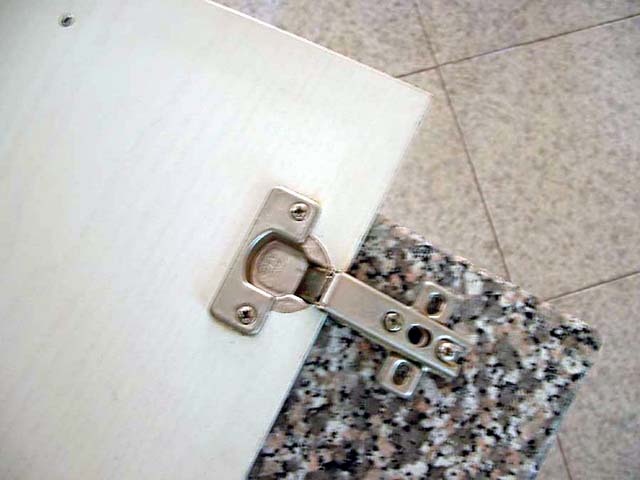
Now, let’s replace the broken hinge with the new one. To remove the old hinge, I recommend avoiding pulling it out vertically by leveraging a screwdriver. Doing so risks damaging the edges of the hole and causing the lacquer on the door to chip off.
The method I’ve found to be the most effective is to first loosen the hinge by rotating it within the hole, using the hinge arm itself as leverage.
Installing the new hinge
We move on to installing the new hinge by marking the holes for the base screws with a punch (crafted by cutting and sharpening the tip of an old screwdriver using an angle grinder) or a pencil. Remember to position the marks at the centre of the slots to allow for possible vertical adjustment.
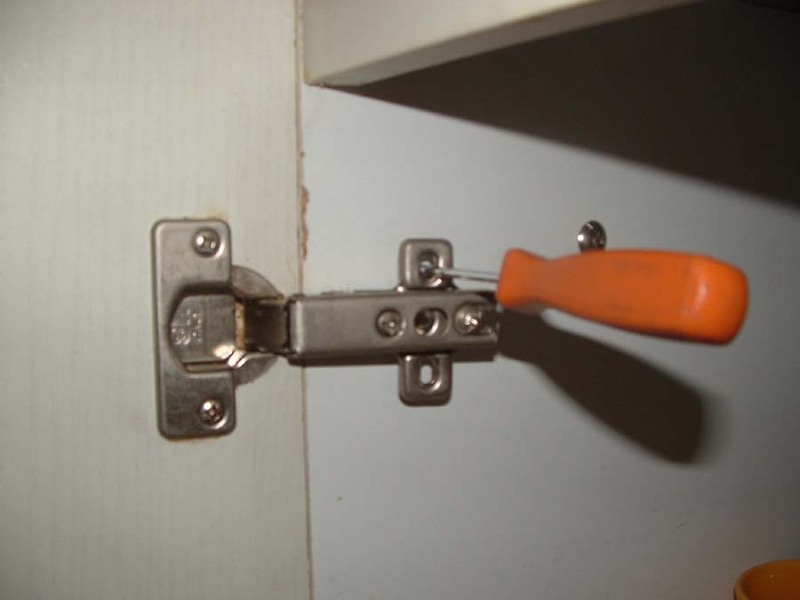
Adjusting the hinge
We secure the base with screws and adjust the distance of the door by loosening the rear screw, ensuring that there is a 4–5 mm gap between the door and the side of the cabinet.
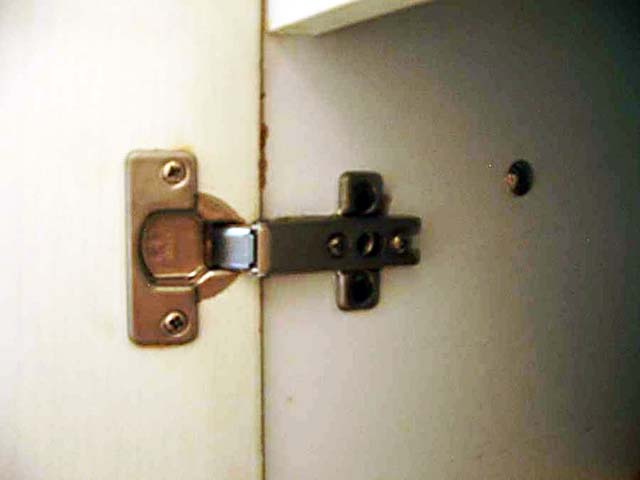
Finally, all that remains is to adjust the closing position with the dedicated screw, and it's done.

At this point, the article is complete. Anyone with questions or curiosities, or simply wishing to let us know that this article has been helpful, can write on the forum (from which this article was sourced) at this link: https://www.ilsitodelfaidate.it/FDTForum/viewtopic.php?t=6808
Thank You
Mariobrossh