
 English (United Kingdom)
  Italiano (Italia)
Indice
- Washing Machine Door Lock and Interlock: Everything You Need to Know Before You Start
- What Is the Washing Machine Door Lock and Interlock?
- Where Is the Door Lock Located and How to Remove It
- What's Inside the Door Lock and What Does It Do?
- How the Door Lock Mechanism Works
- The Internal Electrical Mechanism: The Bimetallic Strip and the Switch
- The Door Lock Wiring Diagram
- The Internal Components of the Door Lock: A Closer Look
- Door Won't Open or Washing Machine Won't Start? How to Test and Service the Door Lock
Washing Machine Door Lock and Interlock: Everything You Need to Know Before You Start
Have you ever tried to open the door of your washing machine while it's running? If you have, you already know how that went — it won't budge no matter what you do! But if one day your washing machine won't start despite the door being properly closed, or the door stays locked at the end of the cycle for no obvious reason, the culprit is most likely right there: the door lock, technically known as the door interlock.
In this guide we'll look at what it is and where it's located, how the internal mechanism works, how to test whether it's faulty and how to service it — everything you need to diagnose the problem and, in most cases, fix it yourself without calling out a repair technician.
What Is the Washing Machine Door Lock and Interlock?
-
For many years now it has been a legal requirement for washing machines to be fitted with a safety device that performs two essential functions, designed above all to protect children from accidental contact with the spinning drum:
- Prevents the cycle from starting if the door is not properly closed.
- Prevents the door from being opened for the entire duration of the wash.

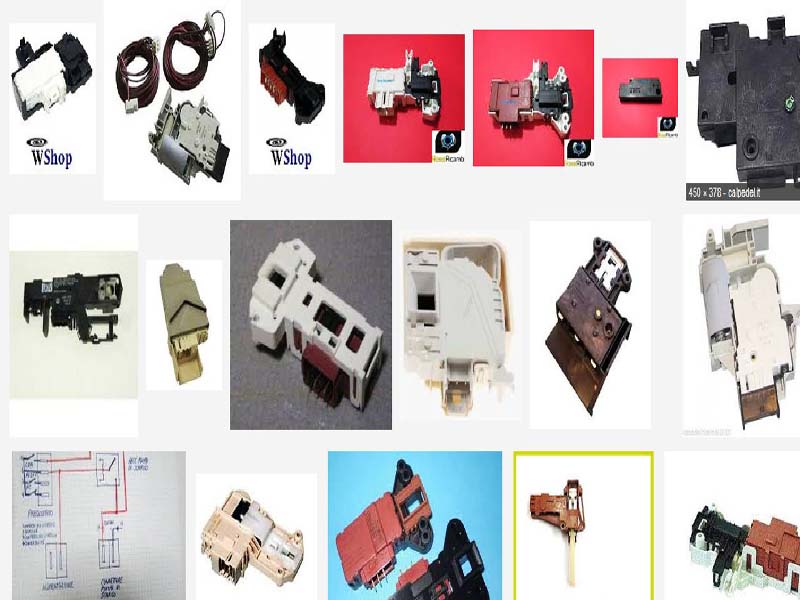
"Door lock" is the common name for what is technically called a "door interlock" or "door latch sensor/actuator". There are many different types — every washing machine brand has its own, and even different models from the same brand often use door locks of different shapes and sizes. Despite these cosmetic differences, the vast majority of them work according to the same basic principle, which we'll look at in detail in the following sections.
Where Is the Door Lock Located and How to Remove It
-
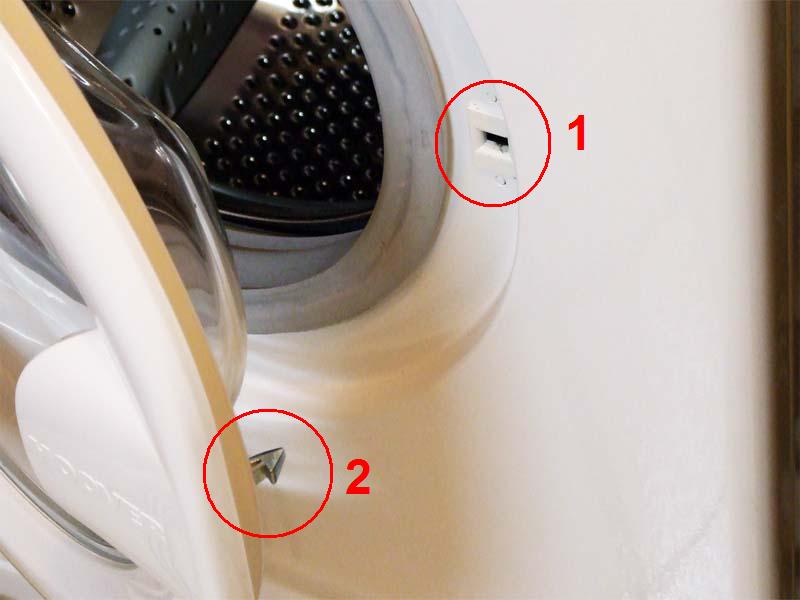
The door lock is positioned on the front panel of the washing machine, at the point where the latch (2) — the small plastic tongue on the edge of the door — slots into its housing (1). Both elements are clearly visible in the photo.
There are generally two ways to access and remove the door lock:
From the top: By removing the top panel of the washing machine you can get a clear view of the door lock mechanism. Tilting the machine backwards causes the drum to shift away from the front panel, which often makes it possible to reach and remove the component without any further disassembly.
From the door seal: By removing the rubber gasket that sits between the door and the drum, you can gain direct access to the door lock for removal. This is generally the most straightforward method and the one most commonly used.
What's Inside the Door Lock and What Does It Do?
Most washing machine door locks are electromechanical in nature and contain no electronic components whatsoever. On the body you'll find three spade connectors (faston): two supply power to the internal mechanism, while the third is the contact that gives the "go-ahead" signal to start the washing machine.
This signal is only sent when all three of the following conditions are met simultaneously:
- The machine is powered up (plugged in, switched on, programme selected)
- The door is properly closed
- The locking mechanism has been activated and is preventing the door from being reopened
When all three conditions are satisfied, the door lock closes the electrical contact on the third connector, supplying power to virtually all of the electrical components in the washing machine.
⚠️ Important: if the door lock isn't working correctly, the washing machine will stop functioning altogether — it won't fill with water, the drum won't spin, and the water won't heat up. Before looking for faults elsewhere, it's always worth checking this component first.
How the Door Lock Mechanism Works
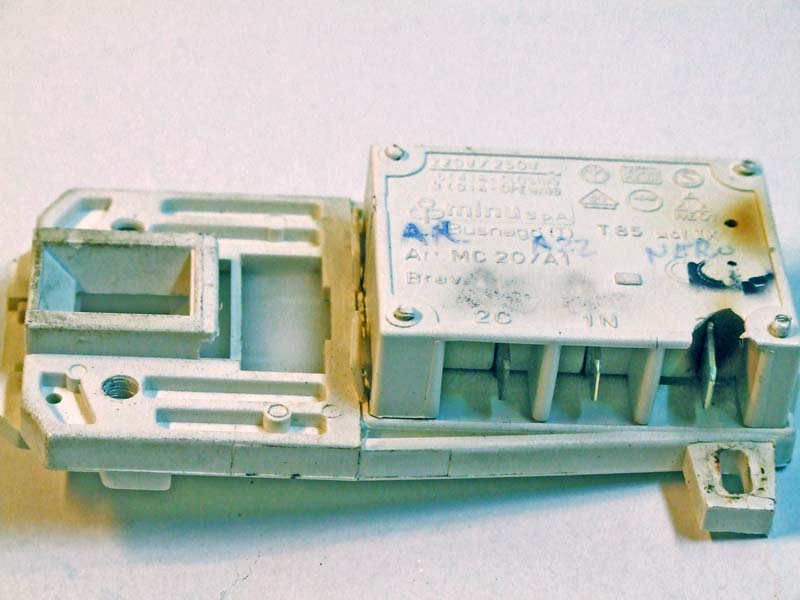
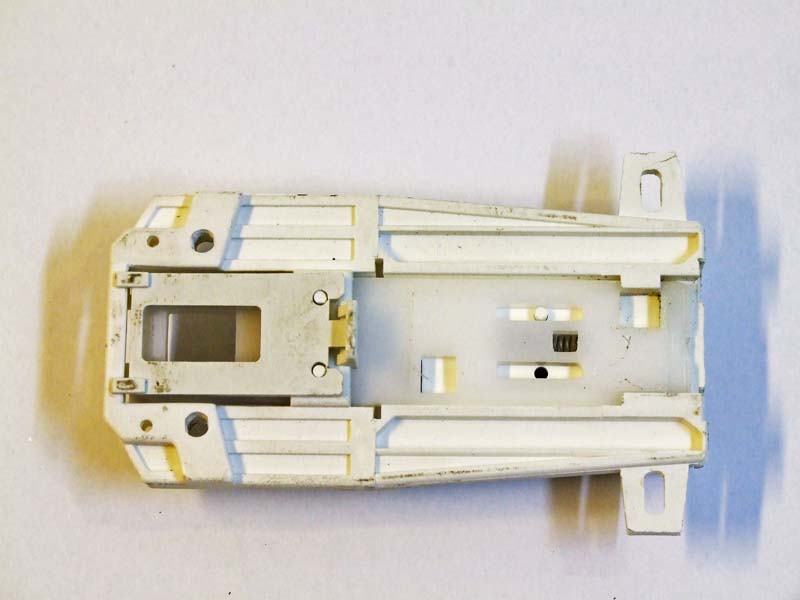
The component shown in the photo is the latch housing — the "latch" being the technical name for the small plastic tongue on the edge of the door that slots into the door lock when the door is closed.
Inside the housing there is a moving part: when the door is shut and the latch slots in, this part is pushed out of its resting position. This mechanical movement performs a first function:
- Detects door closure — the movement of the part signals to the internal mechanism that the door is properly closed, giving the go-ahead for the wash cycle to start.
Once the programme has started and the locking system is powered up, a second function comes into play:
- Prevents the door from reopening — the mechanism, now powered, physically locks the moving part in its new position, preventing the latch from being released and the door from being opened for the entire duration of the wash.
The Internal Electrical Mechanism: The Bimetallic Strip and the Switch
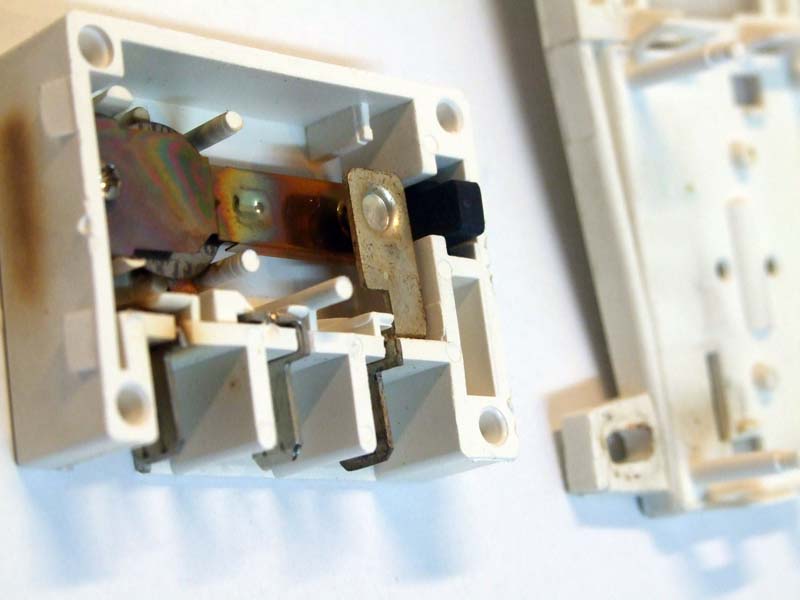
Opening up the door lock housing reveals the internal electrical mechanism: at its core is a simple switch that, when it closes, connects connectors 1 and 3.
The closing of this switch doesn't happen through direct mechanical action — instead it exploits a rather clever physical principle: the bimetallic strip, also known as a "thermocouple". This is a metal strip with the property of bending when heated and returning to its original position when it cools down. The heat is produced by a heating element connected to connectors 1 and 2: when powered, it heats the strip, which bends and moves the switch from the open to the closed position. This also explains why the door lock remains active for a few tens of seconds even after the machine has been switched off — it's simply the time needed for the bimetallic strip to cool down and return to its resting position.
The small plastic pin highlighted in the photo by the red circle, which is lifted by the movement that closes the electrical contact, serves a dual purpose:
- Prevents the electrical contact from closing if the moving part in the latch housing hasn't been displaced — in other words, if the door isn't closed
- Locks the moving part in the closed position once the latch has slotted in, physically preventing the door from being reopened for the entire duration of the cycle.

The Door Lock Wiring Diagram
As you can see from the diagram, the electrical circuit of the door lock is actually very straightforward and consists of just two elements connected together:
- Connector (1) is the common wire, shared by both the heating element and the switch
- Connector (2) is the second connection of the heating element
- Connector (3) is the second connection of the switch
In practice: when voltage is applied between connectors 1 and 2, the heating element warms up, the bimetallic strip bends and closes the contact between connectors 1 and 3, giving the go-ahead for the washing machine to start.
💡 Useful tip for diagnosis: by measuring the resistance between connectors 1 and 2 (the heating element) with a multimeter, the reading should be somewhere between 1,000 and 6,000 Ohms. A reading outside this range — or worse, an infinite resistance indicating an open circuit — is almost certainly a sign that the door lock needs replacing.

The Internal Components of the Door Lock: A Closer Look
The photo shows the individual elements that make up the switch mechanism, separated out for clarity:
- The contact blade (the golden metal piece on the left) — this is the moving part that physically opens and closes the circuit between connectors 1 and 3
- The bimetallic strip or thermocouple (the small dark metal disc) — this is the heart of the mechanism: it bends under the effect of heat and drags the contact blade with it, closing the circuit
- The heating element (visible inside the body of the door lock, the whitish cylinder) — this is the resistor that, when powered between connectors 1 and 2, produces the heat needed to bend the bimetallic strip
Seeing the components laid out separately really drives home just how simple yet effective this mechanism is: no electronic components whatsoever — just physics and metallurgy working together in the name of safety.

Door Won't Open or Washing Machine Won't Start? How to Test and Service the Door Lock
Quick Functional Test
The first test is dead simple: switch the machine on, wait a few seconds and try to open the door. If it opens without any resistance, the door lock isn't doing its job and needs to be inspected.
Multimeter Test
For a more precise check, measure the resistance between connectors 1 and 2 (the heating element) with a multimeter. The reading should be somewhere between 1,000 and 6,000 Ohms, as outlined in the previous section. If the multimeter shows infinite resistance — meaning an open circuit — the heating element has burnt out and the door lock needs to be replaced.
Visual Inspection
A visual inspection of the inside can also give you some useful clues. Unusual blackening of the switch contacts inside the door lock is often a sign of a problem. That said, it's worth bearing in mind that a certain degree of blackening — both inside and outside the casing — is perfectly normal, given that the door lock contains a heating element: on its own, it's not a reliable indicator of a fault.
If the heating element tests fine but the door lock still isn't working, the cause may be mechanical: broken parts, deformed components or worn moving parts, all of which can only be assessed through a direct visual inspection.
Servicing the Door Lock
If the door lock doesn't need replacing but you'd like to restore it to full working order, you can service it by cleaning the switch contacts and the heating element contacts with an electrical contact cleaner spray, and lubricating the moving parts with a silicone grease suitable for plastic components
.
Frequently Asked Questions About the Washing Machine Door Lock (FAQ)
My washing machine won't start even though the door is closed — is the door lock to blame? It's one of the most likely causes. First of all, try closing the door more firmly: if the machine starts, the closure sensor is beginning to fail and the door lock will probably need replacing before long. If it still won't start under any circumstances, carry out the multimeter test as described in the previous section.
The door stays locked after the wash cycle — is that a fault? Not necessarily. As we've seen, the bimetallic strip takes 30 to 60 seconds to cool down and release the lock after the machine has been switched off — that's perfectly normal. If however the door stays locked for a much longer time or never releases at all, it could be a fault with the bimetallic strip or the heating element failing to cool down properly.
My washing machine won't fill with water, won't heat up and the drum won't spin — where do I start? If all the components seem to have stopped working at the same time, the first place to look is the door lock. As explained in this article, it's the door lock that gives the go-ahead to virtually all of the machine's electrical components: if it's faulty, everything stops.
The door lock is blackened on the outside — do I need to replace it? Not necessarily. A certain degree of blackening is normal, given that there's a heating element inside. Only if the blackening is very pronounced and accompanied by other signs of malfunction is it worth opening it up and inspecting the internal contacts.
Is it better to repair or replace the door lock? It depends on the extent of the fault. If the heating element has burnt out, replacement is almost always the most practical choice: the part costs very little and is easy to find. If on the other hand the contacts are just oxidised or the moving parts are stiff, a service with contact cleaner spray and silicone grease may be enough to get it working properly again.
Can I find a replacement door lock for any washing machine? Replacement parts are generally available for the vast majority of brands and models, both from specialist appliance parts suppliers and online. To find the right part, it's a good idea to have the model number of your machine to hand and, if possible, the part number printed on the door lock itself.
Conclusions and Acknowledgements
And here we are at the end of this guide: I hope that the explanation of how the door lock works has given you a clear and complete picture of how this small but essential component does its job, and that the tips on testing and servicing it will come in handy the next time your washing machine decides it doesn't want to start.
If after reading this guide you still have questions about how the washing machine works as a whole and how all the various components interact during a wash cycle, you'll find a complete explanation in the dedicated article: How Does a Washing Machine Work: Components, Diagram and Cycle Explained
If you've found this guide useful and would like to explore other home appliance repairs, you can carry on reading by visiting the other content in the Home Appliances section of the site, where you'll find many more practical guides and step-by-step explanations.
I care deeply about the quality and originality of the content I publish, and for this reason I'd prefer it not to be copied or republished elsewhere. If however you think this guide could be useful to others, I'd be really glad if you'd share the link to the page — it's the most straightforward way to spread the information and support the work that goes into every article.
For questions, clarifications or simply to let us know you enjoyed the article, feel free to post in the dedicated discussion thread on the forum: <Come Funziona una Lavatrice - FORUM> (please note that the forum is in Italian only, but we will do our best to reply to messages written in English too)
Happy DIY Repairing, Everyone!
Luciano (Capitan Farloc)