
 English (United Kingdom)
  Italiano (Italia)
Indice
Is your single-lever mixer tap getting stiff or jerky when you move it? Before rushing to buy a new one, try giving the cartridge a good clean and repair! In this step-by-step guide, I’ll show you how to take it apart, check it, and get it working smoothly again using just a few basic tools that every DIY enthusiast is likely to have. With a little patience and care, you can bring your tap back to life — good as new, and at zero cost.
Introduction
The repair I’m about to describe isn’t typically recommended, as there’s no guarantee of success or long-term durability. That’s why a professional plumber would likely avoid it—and rightly so, since they must stand by their work.
However, I’m not a plumber, just a DIY enthusiast. Even though I knew this repair might be pointless, I still wanted to give it a shot—of course, on my own taps.
After seven years of using my new bathroom taps (sink and bidet), the mechanism gradually stiffened. Eventually, due to excessive force, the plastic around the pivot broke, making the lever unusable.
I replaced the cartridges, but after another seven years, the problem returned—the taps started stiffening again.
So, before they broke once more, I took action and carried out the repair, which I’ll describe in this article. Now, four years have passed, and the taps are still working!
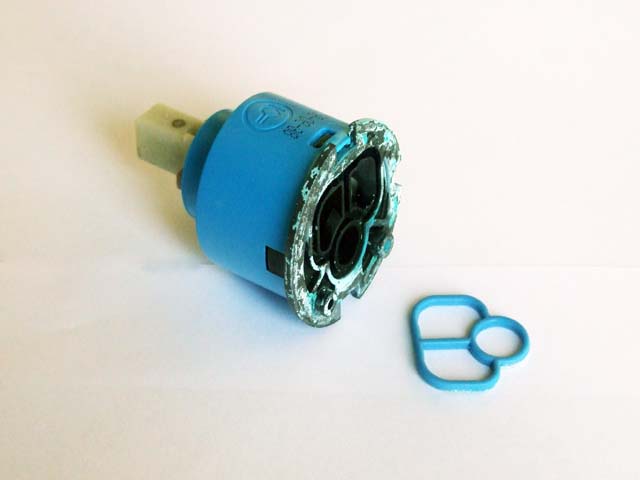
STEP 1 - Opening the Cartridge Housing
Let’s go step by step. The first thing to do is, of course, removing the cartridge from the tap. You can follow the instructions in the article on this site, which explains How to Remove and Replace the Internal Cartridge of a Single-Lever Mixer Tap (by Capitan Farloc)
Once that’s done, the first check is to verify that the cartridge housing is intact, ensuring there are no cracks or splits. If the outer casing is damaged, it’s unlikely the repair will be successful.
Next, the bottom cap needs to be removed. This step requires extra caution, as cartridges aren’t designed to be opened, meaning there’s a risk of breakage.
Usually, the bottom cap is secured with snap-fit tabs. Using two flathead screwdrivers and a bit of patience, you should be able to detach it without much difficulty.
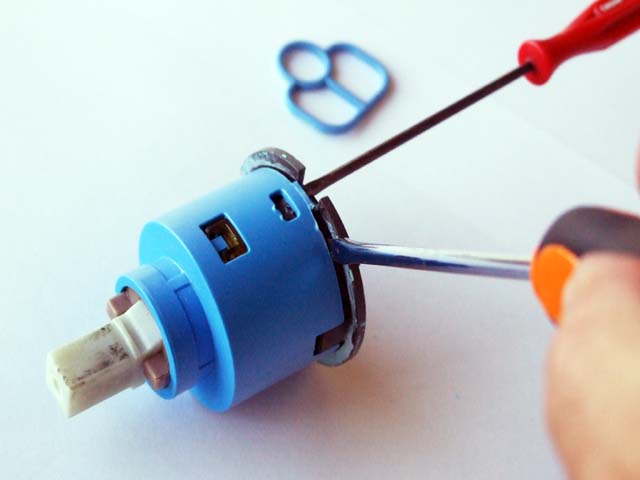
STEP 2 - Disassembling the Internal Mechanism
Once the bottom cap of the cartridge has been removed, be mindful of the components that come out. It’s crucial to remember their positions and orientation for reassembly.
To keep track, you can:
- Use a pencil to make small markings on each piece indicating its sequence and direction.
- Draw a sketch of the individual components on paper.
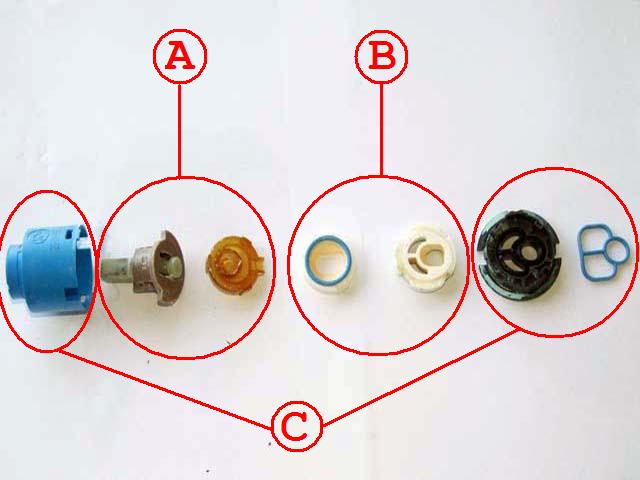
- Or, as I did, align all the pieces in the correct order and direction on a plain white sheet and take a photo for reference.

STEP 3 - Identifying the Three Key Sections of the Mechanism
The components of the cartridge can be divided into three distinct groups, based on their position and function:
- A) The parts responsible for the mechanical movement of the tap.
- B) The core mechanism of the tap—the heart of the mixer cartridge.
- C) The outer housing that encloses the entire system.
In the following sections, we’ll analyse each group separately and provide tips for carrying out the servicing process.
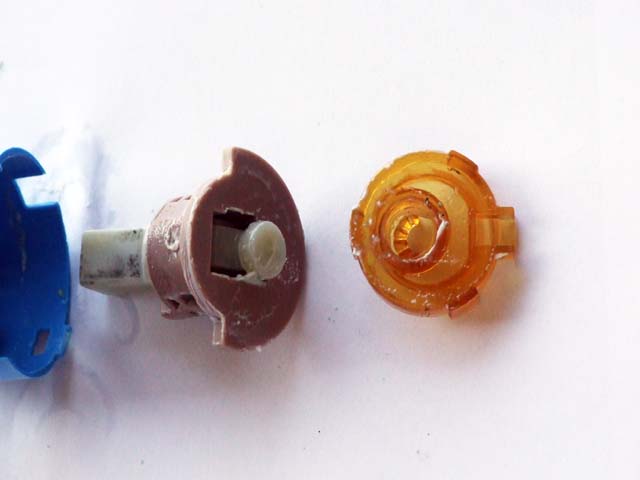
STEP 4 - Servicing the Components in Group A
The upper section of the cartridge transmits movement from the mixer lever to the ceramic discs inside the tap (Group B).
The components in this section should not be in contact with water. To prevent this, the orange/brown rubber membrane at the base acts as a seal, blocking water from entering the mechanism.
PRELIMINARY CHECKS
Before proceeding, ensure that:
- The rubber membrane is intact, with no cracks or splits.
- The moving parts of the lever are not broken or excessively worn.
SERVICING PROCESS
If both checks are successful, you can proceed with the servicing:
- Thoroughly clean and degrease the components using a mild detergent (I personally use Marseille soap). Rinse and dry everything carefully.
- Reapply lubrication using faucet grease or petroleum jelly, ensuring:
- A moderate amount of grease is applied to the lever and the upper part of the seal.
- The lower part of the seal (which remains in contact with water) must stay clean.
STEP 5 - Servicing the Components in Group B
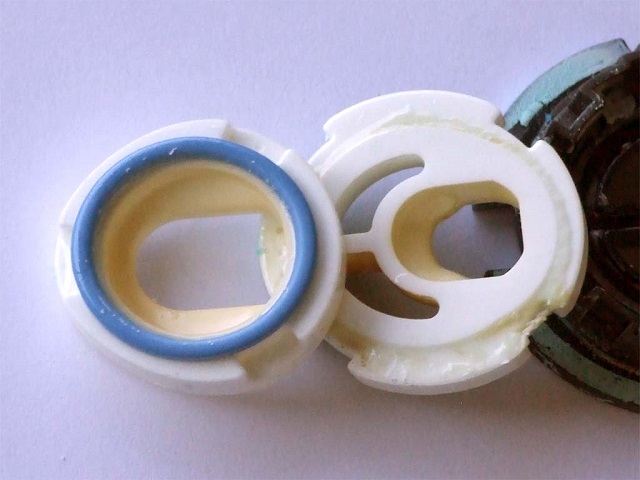
This section consists primarily of two ceramic discs that slide against each other, regulating the flow of hot and/or cold water or completely shutting it off.
INSPECTION CHECKLIST
Before proceeding, ensure that:
- The ceramic discs are not cracked, chipped, or broken.
- The rubber ring seal on top is not dry, cracked, or torn.
SERVICING PROCESS
If both checks are successful, proceed with the following steps:
- Thoroughly clean the seal to remove any limescale deposits.
- Check for scratches on the ceramic disc surfaces where they come into contact. If scratches are present, they can be removed using:
- Abrasive paste, followed by
- Polish, until the scratches have completely disappeared.
- Wash everything with warm water, then apply a thin layer of olive or seed oil to the contact surfaces before reassembling.
STEP 6 - Servicing the Components in Group C
This section consists of the cartridge, the bottom cap, and the external lower seal.
INSPECTION CHECKLIST
Before proceeding, ensure that:
- The housing components are free from cracks or breaks.
- The seal remains elastic, with no signs of dryness, cracks, or tears.
SERVICING PROCESS
If both checks are successful, proceed with the following steps:
- Thoroughly clean all components to remove any limescale deposits.
- Clean the seal with a soft cloth, then apply a thin layer of olive or seed oil to maintain elasticity.
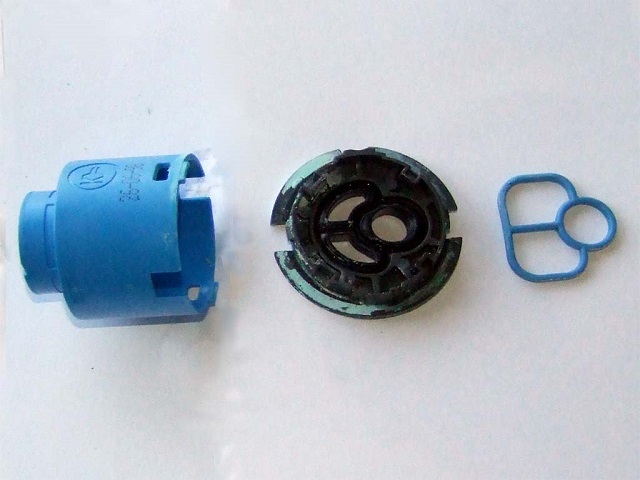
After completing all these steps, reassemble the cartridge following the diagram or photo you took earlier. Then, install the cartridge back into the tap and… let me know if the problem has been fixed!
Thank you all!
Luciano (Capitan Farloc)